Author: lungiletech

  • Steal Back the Treasure

    Calls for restitution African artifacts from Western museums are mounting. Against this backdrop, Nigeria’s response to the British (Second World Black and African Festival of Arts and Culture) in pirating the head of Queen Idia to use it as a logo for Festac 77 , proposes another dissonant route that challenges the very idea of the work of art as unique object.

    Tam Fiofori gives the history “When in the run-up to FESTAC ’77 Nigeria asked Britain and the British Museum to return the exquisite carved ivory mask of Queen Idia which had been chosen as the symbol of the FESTAC ’77 logo, the British had the diplomatic nerve to suggest that the Queen Idia could be loaned to Nigeria for a sum of two million pounds sterling. Of course Nigeria rejected the ridiculous offer and, Oba Akenzua 11 – Patron of the Benin Bronze casters, Ivory, Wood carvers (and other) Guilds – asked the best of the skilled ivory carvers of Benin to produce a ‘photographic’ copy of the original carving and this was successfully used for FESTAC ’77.” (Forever Bronze, Modern Ghana, 2009)

    Meet the artist who pirated Queen Idia back in calving the Festac 77 mask below.

    Check out Akin Adesokan’s Festac 77 a faction that explores art piracy, the curse of Festac and its many restless gods and even suggests the festival was curated by Esu Elegba:

    Imagine,
    first,
    a priestess of Esu (Elegbara), the West African god of the crossroads and inspiration for the less tangible practice of hermeneutics. The woman, in her late sixties when the story begins, in August 1976, in a small village three hours by car north of Lagos, is also the mother of twins born in 1930. One of them was dead within months of birth, hence the obligatory recomposition of the spirit of the departed in ere-ibeji. The twin sculptures are polished to shiny black by original emulsion and decades of oiling and handling. Her profession of Esu does not confl ict with her attendance on the spirit of the twins, or even the fact that her children answer to Muslim names. Both are her life, fabric of the relative peace of early-to-mid-twentieth century western Nigeria, “with its modern constructions with one foot in the bush…the whole area with its infi nity of night lights that appear to illuminate the noise”, as seen through the eyes of Edouard the Antillean. The peace was relative because, in times past, when she was not yet a child, gunshots from the hundred-year wars were the heartbeats of life, its passions the periodic fi res of ostentatious destructions. Insensate times: the smell of burning ivory, the sound of blunderbuss, the undying certainty that what was sold down the river for a fl ask of rum or sachet of gunpowder could not, like the river, fl ow back. What was gone was gone; the law of eternal return did not apply. Her name is Elesu, she who professes Esu.”

    Soyinka proposed we simply steal them back:

    “Perhaps the single most significant event of that festival, however, was one that never did take place: this was the repatriation of the original of the symbol… [the] famous ivory mask from Benin, exquisitely carved and detailed, remained safely ensconced in the vast labyrinths of the British Museum in London. The mask was stolen property, and the aggrieved had a right to reclaim their property by any means. What I proposed instead was that a task force of specialists in such matters, including foreign mercenaries if necessary, be set up to bring back the treasure—and as many others as possible—in one swift, once-for-all-time, coordinated operation. Spiriting away the Benin mask for FESTAC—the 1977 Festival of Black and African Arts—in good time for the opening of the festival would have been much easier, cost much less, and redressed, albeit symbolically, an ancient wrong. I was quite ready to be part of the team. The potential consequences seemed trivial, considering the prize.” (Wole Soyinka, You Must Set Forth at Dawn: A Memoir, 2007)

    This has been this has been the basis for Nigerian cultural production since Festac – Onitsha, nollywood, Naija jams etc. Also read Uzor Maxim Uzoatu’s on the Onitsha Republic and Louis Chude-Sokei on how Nigeria invented the internet.

    More soon come! Watch this space for the FESTAC book and LP.

  • Festac ’77

    by Akin Adesokan

    Imagine,
    first,
    a priestess of Esu (Elegbara), the West African god of the crossroads and inspiration for the less tangible practice of hermeneutics. The woman, in her late sixties when the story begins, in August 1976, in a small village three hours by car north of Lagos, is also the mother of twins born in 1930. One of them was dead within months of birth, hence the obligatory recomposition of the spirit of the departed in ere-ibeji. The twin sculptures are polished to shiny black by original emulsion and decades of oiling and handling. Her profession of Esu does not confl ict with her attendance on the spirit of the twins, or even the fact that her children answer to Muslim names. Both are her life, fabric of the relative peace of early-to-mid-twentieth century western Nigeria, “with its modern constructions with one foot in the bush…the whole area with its infi nity of night lights that appear to illuminate the noise”, as seen through the eyes of Edouard the Antillean. The peace was relative because, in times past, when she was not yet a child, gunshots from the hundred-year wars were the heartbeats of life, its passions the periodic fi res of ostentatious destructions. Insensate times: the smell of burning ivory, the sound of blunderbuss, the undying certainty that what was sold down the river for a fl ask of rum or sachet of gunpowder could not, like the river, fl ow back. What was gone was gone; the law of eternal return did not apply. Her name is Elesu, she who professes Esu.
    Imagine,
    next,
    an out-of-job councillor, a creature of the military regime which has been in power for ten years, and claims inspiration from the warlike spirit of the iron-god to whom dogs are sacrifi ced by all workers in iron every February. He has no job right now, two years from the Constituent Assembly that will prepare the constitution of the Second Republic. Councillors’ positions are rotated among a crop of semi-educated men who used to be foot-soldiers of the Action Group, the party of the West that distributed the good things of life from Olympian helicopters. A fi fty-year-old Methodist with the habit of clutching a leather folder everywhere he went, Kansilo was a councillor long enough to have evolved an identity from the job. He is no longer one, but he still performs the duties – aff ects the pomp and circumstance of performing them. Such is the fl uidity of life on this fringe of offi cialdom, villages managed by the invisible hands of civil servants at the Secretariat, who are “directed to inform” by the Permanent Secretary who in turn keeps his position at the mercy of the Military Governor, Brigadier Oga Kekere. In this milieu, of a violence so deadening as to penetrate the very stuff of life into which its monstrosities disappear to be reborn as armed bandits shot at the Bar Beach on the pen-wielding authority of Brigadier Oga Kekere, it doesn’t matter that Kansilo is no longer in the Service. Who cares who knows?
    Imagine the third character,
    Cousin T, a.k.a. Tarifomah (Inter-Reformer), alias I-Dey-Dere, bus-loader, tout, back-up singer for an apala band, apprentice driver, possessed of an incredible gift of the gab. Cousin T doesn’t really live in the village; he lives in Ibadan but, as an apprentice driver, he arrives with the passenger mammy-wagon almost daily, and it is not unusual for him to miss a return journey as the lorry blasts its silencer out of the village while he is busy distributing his gifts to crowds who can’t get enough of him. When those gifts are wrapped in the foil of his poetry, the listener gets the distinct impression that the man had an argument who spoke of the language of this gift-giving as the missing link between music and speech. Cousin T would say: When a shoemaker’s wife prays, ‘May accursed feet not enter our home’, she is ruining her husband’s business.
    He would say: ‘I shall feed on (i.e. prosper from) my profession’ is a prayer unbecoming of the night-soil man. He finds out what’s going on in the world by listening to the radio or eavesdropping on the news-stands at the Ayeye Terminus while waiting on a Bedford lorry. This is Ibadan, that city of improvised “refreshment stands or beer halls lining up along the brush” of which, again, Edouard the Poet of Relations sings in a French syntax mediated by skeptical Pan-Africanism. Cousin T makes history out of news, legends out of phrases. By the time he’s done explaining the latest involvements of Chief Mangosuthu Buthelezi of the newlyformed Inkatha Freedom Party in anti-apartheid politics, his audience is invited to imagine a figure out of a Daniel Fagunwa novel, down to the name. The chief as Gongoshu. Twenty when the story begins, Cousin T has had rough dealings with Elesu in the past. We’ll get to that. The word is out, and Cousin T brings it home, that a spectacular festival showcasing the best of African arts, cultures and customs is in the pipeline. It will be held in Lagos, at the National Stadium and inside the magnificent theatre just imported for the purpose from Sofia, Bulgaria. The theatre is designed like a Colonel’s cap; the head of state is Lieutenant-General Obasanjo. This is what Cousin T says: Lagos is hot. Obasanjo takes off his cap, and sets it down saying, “That is your theater! Dance dance dance and forget your sorrow!”
    People laugh. They are gathered under the massive acacia tree at the edge of the bus station, with a view of the road to Ibadan. Someone wonders if Obasanjo had then returned home with his head bare. Cousin T smirks and says that army caps are ten for kobo. He says that Lagos is crowded, or there would be two or more free caps to throw around. But there is no space to waste in Lagos. Tarifomah, someone else asks him, have you seen this cap? And how can anyone dance inside a cap? Go to Iganmu, Cousin T fires back. I dey dere, he says. The cap is shiny and big, but you can’t get inside. For now there is no access.
    Once he says I dey dere, people usually back off. If he doesn’t say that, he says, finger pointed: You dey dere? It is late morning. The passenger lorry is long departed, but if Cousin T gets through with this undertaking, he might yet be on time for the second trip, at two o’clock. So the interrogation continues. This dance in Lagos, what is it about? Did someone old and wealthy die? Cousin T says it is all about Festac.
    What does it mean?
    His lips pursed to deliver a sneer as fitting response to the dumb question, Cousin T wonders what “mean” means.
    What does Lagos mean? What does Tarifomah mean? Just alias, he declares with a superior air. You see it you know it.
    But alias for what?
    Festac alias African dance and culture!
    No one can miss the exclamation punch of the statement.
    Down the road, a figure emerges in resplendent agbada, clutching a leather pouch under his arm. Cousin T is the first to notice, and as he watches the figure approach, he makes a comment under his breath. The rest giggle.
    What does he say to make people laugh at the approach of this important man? Kansilo is not resident in the village, but people know him very well. The youth especially, able-bodied men like Cousin T, are getting close to the age of dread at this time of the day. Thank God this is August. Last March, every March, Kansilo enters the village with the stealth of a jungle cat, the last of a team comprising six strong-armed men, each of whom has found his way in through one of the numerous bush-paths. These are the tax officers, and it is their duty to gather as many young, able-bodied men as possible, ask to see the receipts of their income tax. That prized paper, with the coat-of-arms of the State Government sitting at its crest! If you are of tax-paying age and you do not have this paper, you do not loiter about the village at ten o’clock in the morning. You take off at the sight of the man dressed in a flowing agbada and carrying a leather pouch. For Kansilo’s men do not arrive by car or lorry. They sneak in, on foot, like bad blood in the network of arteries leading to farms and rivers and other villages, and swoop on a group of layabouts, like the one currently listening to Cousin T’s rhapsodies. You know they have arrived the moment you feel a sudden grip at the scruff of your shirt. Nobody really takes the precaution of paying taxes until this tail-end of the financial year, and so the operation ends with the hemline of one man’s shirt becoming entangled in the hemline of another’s shirt, on and on, until the eight or so victims totter about in a quandary, a spectacular source of jeer for the village urchins. They are chain-ganged three miles to Kansilo’s village, Metoh (from Methodist), from where, unless any of them is able to come up with the tax amount and purchase his freedom proofed with the stamped-paid receipt, they are transported to the council jail at Ido. The age of dread is the tax-paying age. Thank God this is August, that’s what Cousin T says in an undertone. Kansilo walks past them, his demeanor so businesslike it is doubtful that he returns the courtesy of their greetings. He knows where he is going, so no need to ask for directions. The village is constructed in the shape of a honeycomb, houses bunched together in parallel rows that rise and dip in depth, so that to make one’s way from the outskirts to the centre, one proceeds by a series of incrementally diagonal paths that look like shortcuts between the lower and the higher depths. Kansilo’s destination lies between the centre and the outer edge of the village, a distance of a hundred and eighty metres. Crablike he moves, barely nodding to the obligatory ‘welcome’ muttered at him, a sign of extreme bad manners for an out-of-villager. Where is he going? What is he up to? After one or two unkind cuts at the personage in garrulous dress, Cousin T returns to his unfinished business. Next January, he says, I will be at the National Stadium to see Festac.
    He cannot miss the absolute lack of interest in this subtle offer. Everyone knows that all it takes Cousin T to reach Lagos is a wave of the hand at an approaching bus at the Ayeye Terminus, where most drivers are his pals. And he hops on board, paying his way with a running order of jokes, puns, tales and songs. And if he asks to take you along, who can pass up such an offer? The one person certain to go with him is already there – Femo, a distant cousin of his and a notorious acolyte at the Afrika Shrine. But the priorities of Cousin T’s audience seem to have been altered by the arrival of Kansilo, who has the gait of a man going to see the village potentates. Is the tax season about to change? There is no point worrying; whatever brings him will be known even before he departs.
    Kansilo taps carefully at Elesu’s door, which is also the door of the village chief. It is a Compound, a coterie of compartments internally divided as rooms or quarters belonging to each section of a large family according to the pattern of seniority among the male children of its original builder, framed with an open courtyard. Kansilo has crabbed his way into the courtyard. A stranger entering a house as big as this at this time of the day usually announces his presence outside the main entrance, but he has huge credit here. When the village chief ran foul of government funds during the 1973 National Census, he faced more than reprimand. As in most matters to do with money, details of the scandal became as complicated as denominating the new currency, but as the people of the village came to understand it, their chief had simply been faced with the dilemma of making a living out of an accident he had historically risen to defeat. It was better to see it in those terms – the tragic fatality of a way of life not guaranteed to endure. Either that or the misfortune applied to the entire village of Multiple-Paths, steeply decadent, bankrupted by the same habits that used to make it prosperous. But Kansilo had stretched out a helping-hand; the chief’s ordeal thus ended with three days away from the village, a fate more bearable than a judicial inquiry, and when he returned, maligned defender of his people’s interests, it was to continue to reinforce the very system that had once ambushed him. He had Kansilo to thank. The chief is advanced in age; he’s the first son of the family, older than Elesu’s husband by eighteen years. He is not the reason the renewable councillor taps at the door today.
    Elesu comes to the door; seeing who it is, she enthusiastically throws it open – it is something of an honor to receive him.
    There are a few people about the Compound: children too young to go to school, young women preparing for the market, the very old, like the chief, observing the routine of boredom with the experience of half a lifetime. Having admitted the visitor, exchanged pleasantries, responded to small-talk with the fulsome mien of a former beneficiary, Elesu invites Kansilo to a seat. But no, says the man with the leather pouch, what brings him is not something to discuss in the hallway, within hearing distance of young women’s ears primed like magnets for the iron-filings of gossip. At a corner of the courtyard, to the distant left of the door through which Kansilo has just walked, sits a private shrine of Esu, the squat and dark fellow, marked with a block of laterite the size of a human head, the supporting wall muraled with years of palm-oil offerings. Further down, in an alcove built for the purpose, are the carvings of the god in different poses, each representation reverential but honest, in commonsensical acknowledgment of his ways: principled unpredictability.
    Nearby there are also the ere-ibeji, the sculptures embodying the spirit of the twins, one of whom still lives, has just sent himself off on an errand before the arrival of the august visitor. In front of the alcove, there’s a bench carved out of brown stone, a bigger laterite to stand guard over the smallish king of hermeneutics. Elesu and her guest sit. Then someone appears at the outer door of the courtyard: Cousin T.
    What does he want? He stands looking directly into the courtyard, seeming to need attention but not daring to step into the house. What does he want? Elesu’s conversation has hardly begun. Asking for a moment’s excuse, she rises and goes toward the young man. But before she reaches the door, Cousin T breaks into a smile, bows comically, and turns tail. He does not look back. A stunned Elesu watches him go, apprehensive of pranks.
    She looks out. There is no one else about. Another shrine of Esu sits in the open, on the near side of the courtyard, behind the house to the left that cuts a diagonal line to it. A few years ago, Cousin T was in the village for a whole week. Out of job or out of trouble, he went everywhere, trailed by desperate village urchins looking for mischief once it became clear that their leader had run out of stories. No one knew when and how it happened, but a little before noon, a hawker of shea-butter calling into Elesu’s courtyard noticed an unusual amount of fresh soil at the shrine. Earth plowed afresh around the mound of laterite, its circumference littered with potsherds, ceramics and bits of a broken gourd. It was an obvious sign that the shrine had been vandalized; when Elesu appeared to admire the freshness of the shea-butter (she had no intention of buying), the hawker made a comment about the freshness of earth around the shrine. Shocked, the priestess responded by flinging herself down, on the spot, in awestruck homage to the abused god. She launched into a panegyric, an endless song that looped in and out of sonic focus, adumbrated by the charged desperateness of the singer’s motive. A heartgrieving sight; the hawker was too scared to watch. She lifted her tray and ran. Sufficiently placated with songs and chants, Esu grinned at the priestess, who approached, led by the light of the grin beaming from the halo of brown earth freshly turned. Elesu reverted to her eulogies, now at the measured pace of a plea, placatory, tuneful, but lowtoned, the complacent cooing of a pigeon nestling under the eaves in the heat of the day. Another round of curtseying at the foot of the god, and the priestess tossed a bit of palmoil on the laterite. Propitious palm-oil, the fluid measure of temperance.
    Shortly after, Elesu stumbled on an urchin sitting in a corner of the village, scooping food out of a tin. The lad was eating Geisha, mackerel canned and stewed in tomato sauce. The moment he saw the woman, he rose and fled. Soon she happened on another, who acted likewise, and when she came to the third, she didn’t let him know what was upon him before she got hold of him.
    I didn’t do it, the scared imp cried, Tarifomah took us there!
    News of Elesu’s detective work had reached Cousin T; by the time she appeared at the village centre, cuffing the scamp by his ear, the priestess had amassed a crowd eager to know what had happened and desperate to know what was going to happen. Cousin T stood to one side, studying the crowd, watching Elesu closely. He watched her tell of the abomination of wrecking the shrine of the god of unpredictability. He watched as the crowd reacted in total astonishment to the passionate, patient reconstruction of the horrifying spectacle of a violated shrine. It came down to this: Cousin T had led a band of urchins to the shrine to dig up old coins used as offering to Esu, and had distributed the money among them. Never before, it was said, had this kind of thing happened to even minor gods, the benign ones that people struggled to shake out of neglect. But this, and to Esu, of all things! It didn’t matter whether or not Cousin T took some for himself. It didn’t matter that any offerings given to the god belonged to none but who wished to use it.
    The graph of the priestess’s tale rose and rose, attaining an exaggerated level of declamatory anger, and climaxing with a furious finger pressed down at Cousin T’s nose, a rather mild punishment for the offence, and of which, by the general snorts of indignation that preceded it, the crowd seemed to approve. Then it happened. As swift as the climax of Elesu’s anger, at the very moment her forefinger touched the accused on the nose, a sharp object shot out of the youngster’s hand, catching the sun’s rays with a dazzling immediacy and immediately drawing a red line across the width of the woman’s face. The contented snorts erupted into even more indignant shouts of astonishment, but Elesu’s voice rose above all else. Her face dripping blood, she beat a path through the diagonal cluster of houses crying, I had no idea that he was armed! I didn’t know that he stood for danger!
    The brutal act of slashing the face of a respected woman was condemned; Cousin T was overpowered, hauled before the elders, and scourged. But that day and the next, everyone wondered if he, and not Elesu, had acted on Esu’s behalf. Was not unpredictability, after all, the first thing about this god? In later days and months, Elesu healed the wounds dealt her by working out a friendship with her attacker. And people said: That’s Esu’s way. The deity who attacks his defender.
    And people said:
    There must be a reason that things turned out that way for Elesu. The god she attended might not be predictable, but he was always principled.
    It is from of this sense of purpose and dread that she has risen to approach the comical figure loitering at the door of the courtyard. But he is gone; there are no other rascals around. She scurries toward the shrine to the left of the outer wall. There is nothing unusual about it. She repairs to the laterite bench where Kansilo sits and waits.
    Out of his leather pouch, he brings a copy of Daily Sketch.
    First, he opens the newspaper to its centre spread, placing it on the bench for Elesu to see it. Then he begins to speak. We of the black race are blessed with culture and tradition. We have a great civilization. Our governments recognize this wealth; our cultural heritage is our wealth. Eleven years ago, in Dakar, our people came from different parts of the world, they went to celebrate our rich cultural heritage. It was so good that they agreed to do it regularly – every ten years. Our country is the next host. In January next year, we will have a new festival. It has a name already; they call it Festac.
    Our government has built big spaces to host it. It is a good thing for us.
    He pauses. The priestess, who has been nodding to this odd but nice-sounding speech, says nothing. She watches him; she wonders if he needs a drink of water. She calls into the house for water for the guest. Aware that a more magisterial tone is called for, Kansilo brings the newspaper closer to his face, and reads a passage aloud, but slowly, because although Daily Sketch is an English-language newspaper, he pronounces words that cause Elesu to nod in comprehension.
    “By the term art, we mean all disciplines that are useful to social life and have the character[pause]ristic feature of imparting beauty to the world: sculpture, painting, architecture, music and dance, drama, cinema, etc. The black and African art is not only an important and an essential element of black and African civilization and the greatest contribution of the latter to human culture, indeed it is also, for the structure of the civilization, an element and a factor of specif[halt]city…”
    Kansilo translates as he reads, but Elesu hears only two things: the voice of a preacher, modulated in the mystifying Talking- Book gestures of the missionaries of her childhood, and the word “contribution”. Is this about an attempt to impose new levies? Are people of Metoh planning to plant a church? But she knows better than to ask. She listens. You do not ask the riddle-maker what the devil he means; you beat the devil of riddles by being phlegmatic. What Kansilo means is that as a priestess, custodian of the objects and accessories that impart beauty to the world, Elesu is one of a few people from around the black and African world to give Festac a good welcome. And since opportunity comes but once and opportunity lost can never be regained and time and tides wait for no one and heavens help those who help themselves and the journey of a thousand miles starts with a footstep and no one sings Don’t-Pass-Me-Over while lying down, I Kansilo, who know these things because of my contacts and exposure, wish to inform you that before it is too late, we have to make use of the opportunity that is knocking at the door.
    Atop the deep column of the article Kansilo reads from sits the Festac logo, the majestic head of Queen Idia, the prize ivory sculpture pilfered during the punitive expedition in Benin in 1897. The logo is so positioned that an eye trained on the page cannot miss it; the paper is held in such a way that it is all Elesu sees when she looks. The Queen Idia is an oblong face with the stylized eyes looking down, as if at the nose, two vertical gashes lining the forehead, and behind these, the rest of the head, is the headdress, a complex beadwork bordered by twelve tiaras arranged in a semi-circle. Perhaps a crown, the feminine version of the king’s spectacular royal wear, the envy of those who knew what beauty it would impart to the world and had ensured that it stayed there, in the world, far away from home. They stare at the page for what seems like seventy-nine years. Something waits to be said, Elesu is the one to say it, but Kansilo’s personality has been forged in the crucible of inconvenient moments, the political perception that all transitions are profound or risky and that in order to stay in touch with power it is necessary to befriend forbidden knowledge. Elesu, staring at the female head, is riveted by it. Perhaps not. Kansilo speaks, gesturing at the sculptures nearby, in the alcove:
    All these too can be put in the newspapers, so that they can impart beauty to the world and bring honour to those at home.
    A short speech; having said so much indirectly, Kansilo entitles himself to the declarative. To which Elesu, after a pause just as short, replies that as a custodian she is but an intercessor, and she will perform this role by “asking my father”. She means that the undertaking calls for the propitiation of the fellow of Iserin, the squat mound of laterite present at once in here and out there. There is more: the head of the household, also sitting somewhere nearby and close to dotage, has to be told. In two days, perhaps, it will be possible to offer a detailed response to this declaration. There is more, but a question will suffice. Why is no one sending men and materials to propagate this Festac, like it happened during the National Census? Where are the posters, the radio jingles, the mobile trucks with loudspeakers cackling from their roofs? Kansilo says that the process has just begun. That’s one reason he is here, so early in the day.
    Both are satisfied.
    Kansilo rises to go; he crabs in the direction of the alcove, ready to admire the sculptures. Or merely regard them. He stands and stares. He feels like touching, but he will have to bring forth a coin or two; a toss of palm-oil will not do – that’s a gesture permitted only the priestess.
    Stepping out of the courtyard, Kansilo pauses to light a cigarette. His gait is less businesslike now; he is sauntering through the village, tracing the same diagonal walkways he has earlier hurried through. When the retired councillor pauses again, to acknowledge greetings from familiar voices, Cousin T, who has never been far away, coughs and breaks into a ditty: The sky is overcast. Let no one smoke. The thunder king does not take kindly to flames.
    The rude song startles Kansilo; he turns to look. Then he turns back to complete his greetings, hoping that his acquaintance will at least tongue-lash the youth. The man exchanging greetings with Kansilo sucks his teeth, seeking refuge in a proverb: When a child outgrows the whip, he invites the sanction of the lip; when the rebuke grows tame, the withering eye brings him shame.
    He says it loud enough for Cousin T to hear, but the young man doesn’t seem to care. He circles the area like a rooster angling to mate, humming, whistling, and snapping his fingers to take the score. Unsure what his motives are, Kansilo quickly ends the pleasantries and goes on his way. The ditty is longer than three lines, but Cousin T withholds the final line, where the punch lies. Twenty-two years ago, when he had not yet been born, the song was very popular as a political jingle affronting the Action Group, party of the West, in quarters like the village of Multi-Paths where its rival, the NCNC, had a foothold. The line says: Penkelemes does not take kindly to the Palm Tree (the symbol of AG). Kansilo, let us recall, was one of the foot-soldiers of the old party.
    Several hours later, close to six o’clock in the evening, Kansilo is back, his leather pouch clasped under his arm. This time, he stops under the acacia tree, to acknowledge greetings, scanning the gathered faces for the rude lad of earlier in the day. Cousin T is not there. Kansilo doesn’t have to stop for long just to respond to greetings; he is careful to look serious, to affect the demeanour of the offended. If he wishes to convey the impression that Cousin T is in trouble, he seems to succeed. Whether he is in a position to make the trouble real, beyond impressions, remains to be seen. Walking slowly now, but with greater deliberateness, he makes his way to the house lying between the centre and the outer edge of the village of Multiple-Paths. Cousin T’s song proves prophetic; the sky is becoming overcast: August, month of a million rains.
    When Kansilo sweeps into Elesu’s courtyard, it is as if the woman has not moved a step from the stone-bench inside the portico. She is there, languid on her paunch, picking her teeth in a distracted manner that suggests more habit than necessity. Is she irritated to see him! His influence notwithstanding, the perception of the retired councillor as an unrelenting hustler is as common in the village as rain in August. If in the morning Kansilo was exploratory and indirect, this evening he is deliberate and to-the-point; if the purpose in the morning was to introduce or promote Festac, now the point is to claim its object, that thing which imparts beauty to the world; in the morning it had been up to him to break the ice, now he puts Elesu on the defensive, his mouth trained on her like a hose, drenching her with a deluge of questions:
    What does the chief say? Which of the twins does this represent? Why is the shrine here and not there? What will the god demand? When will you be ready to receive Festac agents from Lagos? Do you mind if I talk to other priestesses?
    The sky is overcast; it is twilight in the village of Multiple- Paths. Somewhere in the neighbourhood, amid the chatters of eventide, a noise more systematic than rhubarb is building up. In the distance, the sky rumbles with the sound of thunder. Following the attack from Cousin T, apart from consciously befriending the youngster, Elesu also revived a practice common to devotees of Esu, but which time and the pressures of Chrislamity had all but rendered quaint: the vow of abstinence. She took to fasting twice a week. Meditation concentrates the spirit. After Kansilo’s departure earlier in the day, she has considered this option, a purer way of readying the spirit for the reception of signals on how to proceed. It is Esu, more than the chief vegetating in the parlor, whose consent is primary. With the aggressive questioning, Elesu secretly wishes for the inspiration to handle the challenge. The noise from the centre of the village continues to rise, or come closer. The rain-clouds gather in density, throwing a dark pall over the village with the coming of dusk. It is time to bring out the storm lanterns. The young girls of the house are returning from the market. The noise trails them, getting louder the deeper they disappear into the Compound. It does not enter with them; it remains outside the courtyard, rowdy but determined, the frustrated hooftaps of a bridled horse. Elesu rises to light the courtyard.
    When she returns, Kansilo is on his feet. The noise, strident and declamatory, stands permanently at the outer door. Drumbeats. The sky is overcast. The sky growls. Thunder sunders the sky, it shudders. Furious fingers of lightning scratch the sky. The night is alight with the sparks. The sound of stones beating an alarm out of tins and bottles has the unsettling clarity of bata, the drum of the thunder god. Then it stops, to be replaced by a one-tone song with an oddly familiar ring: The sky is overcast. Let no one smoke. The thunder king does not take kindly to flames.
    The voice is as familiar as the song: Cousin T. To Elesu it is clear that Kansilo is ready to leave, although his questions remain unanswered. Wait a moment. The minor shrine at the foot of the laterite bench is near the site of the ere-ibeji, repositories of the spirits of the twins.
    Kansilo, I’m done for! Where are my twins?
    Use the light well, Elesu, use the light in your hands.
    Cousin T and his band of drummers are straining at the bridle. The sky dense with moisture cracks from the menace of unruly noises, thunder and lightning, bottles, tins and stones…!
    Kansilo, where are they? Wooden sculptures don’t walk!
    Patience, Elesu, patience. I’m standing here with you.
    Kansilo, I will ask my father to find them for me!
    Patience, Elesu. Let me help you…
    Sango, the thunder king, is the spirit of the rainy season.
    When the god is on the prowl, in anger or leisure, his devotees observe a worse affront than smoking: leaning on a wall. Kansilo, moving out of the way of Elesu’s desperate search, leans backwards, his back resting on the wall of the courtyard. A deafening roll of thunder crashes to earth with the rains, its impact so strong it knocks the storm lantern out of the woman’s hand, plunging the courtyard into darkness. The rain descends in noisy torrents, but above it rise the singing voices of Cousin T’s orchestra, calling on the thunder king to behold the audacity of mortals, and act. Kansilo blunders through the wet twilight without his pouch.
    In the morning, after the rain, a sodden copy of the Daily
    Sketch will stick out of the pouch, next to the ere-ibeji, dark and polished, washed clean by rainwater.

  • BLACKOUT x 7 Octobre

    Native Maqari and Keziah Jones Villa Medici channel Fela take on on Democrazy, migrant labour and hospitality in crisis.

    For more check out the last words of Fela Anikulapo Kuti.


    BLACKOUT
    Native Maqari x Keziah Jones
    Villa Medici – Villa Médicis
    RÉACTIVATION À PARIS LE 7 OCTOBRE VIVA VILLA
    PLACE DALIDA 22H
    #felakuti #migrantlabour #hospitalitycrisis

  • 10 Paragraphs of Music Criticism

    Kodwo Eshun discusses selected paragraphs of music criticism, taking in Kim Gordon’s Art Forum essays, Philip Brophy’s 100 Modern Soundtracks, writing by Dave Tompkins and more, from Off The Page 2011 at the Playhouse Theatre in Whitstable.

    Talk: Kodwo Eshun discusses ten paragraphs of music criticism from Sound and Music on Vimeo.

  • The Tyelera Moment

    by Thabo Jijana 

    On December 13, 2016, in Salem Party Club v Salem Community, the Supreme Court of Appeal ruled in favour of 152 land claimants representing a community of amaXhosa who’d been dispossessed over a century ago by the 1820 British settlers and their descendants. While the court victory has been rightfully celebrated as a tentative triumph of South Africa’s processes of restorative justice, Thabo Jijana suggests that Salem Community v Government of the Republic of South Africa and others is also a seminal event in how it asserts the legal validity of oral history (as largely provided by the community’s witnesses) vs. documented proof (by the landowners).


    To talk about death, Black rural grief … TO DEATH, putting into question colonial constructions of space, so metadiscursive whenever old memories resurface, ever drenched in exhaustion re: foiling the artifices of whiteness, the hail of not once yielding to the Lethe ruptured afresh, reflective nostalgia at high octane, the seeing of place a fundamental disruption of our ways of seeing, to expose that ideology to which much fart-puffing has been tithed, a furious binge ensuing for the untidy, esoteric spark of the anecdotal

    , and that’s when I thought, in that anew-coiled moment of ah-hem, perhaps

    perhaps

    FORGETTING IS NOT THE PROBLEM but that where white is the colour

    BLACK IS THE NUMBER

    In recognizing the maneuvers by which Black rural bantu have found fugitive means to refute the immanence of forgetting, this must be said

    : we are all forced to resituate Black death within a retropresent though still largely spontaneous sphere of memoir-realizing, by which we mean what defines our kin (to each her own, idiosyncratic as to the relational dot) decides how we greet their deaths … to treat dying as not only representational of the life histories we corroborate with our body language but as archival material resistant to the forces shoving their imperialist erasure down our throats, discrediting the settler value system inherent in historicizing rural people’s borderless movements … self-dossier-ing one’s life bedevils us to hang onto the explosive psalms of our everyday, tracking the hems of our being one remembered detail at a time, a lifetime of identity-making cut down to its minutiae …

    What I am attempting to convey is the simple but heavy truth

    that

    BLACK PEOPLE ARE ALWAYS KEEPING SCORE

    , especially in those moments when even statistics usher us, needle and thread, towards a necessary return to riddling narratives, those vain appeals that come again within your hearing and that we send away without having responded to them in their space, our space, the space that their passage describes, as if an imperious force dictated that the same figure be taken up again and again, that an endlessly new version of it be created, thus making sure, through the repetition of a model, a structure, a gesture, of the incessant reiteration of signs that trace faces and stories, A REFUGE AGAINST THE IRREVERSIBLE, better verbalized in the context of the unmitigated presence of death in rural communities such that recalling faces, names, quotables, locations, genealogies takes on a running commentary bar sustained depth

    1. Rarely, as they did in my childhood, are heads of families buried in the familial yard, by the kraal these day

    2. I hail from a Ciskei village of erstwhile farmworkers violently relocated from their original farmlands

    3. In the fifteen years since my father died, I have visited his grave (by myself or otherwise) four times

    4. 30 out of the 45 people who met their deaths in Marikana came from rural Transkei

    5. Bestowed on my village recently was its right to ownership of stolen land

    As in Salem Party Club and Others v Salem Community and Others (2017), in which Salem’s Black community, Tyelera, had the Constitutional Court uphold its right to ownership of land they were dispossessed of, Justice Edwin Cameron was quick to remind the 17 applicants opposed to the Tyelera community’s claim to the Salem Commonage

    : Oral history is not only concerned with historical facts, but also the values and convictions of the community it recollects

    7. Grace Nichols, probing

    : How can I eulogize their names

    What dance of mourning can I make?

    8. A tangent on the grammar of this data, stretching my limits of coherence to say

    : the informatics of Black death become the chains whose links often tie us into straightjacketed readings of this historiography of rural bereavement, predetermining the tone of our solidarity with unfamilial sorrow

    9. In voicing the past, we look to rural rituals (and dying, as a critical life stage, comes with a plethora) as the most visible confirmation of the replicability of rural memory, if only to critique our strong tendency to rationalize dying as primarily existing beyond the phenomenal world

    1o. 2:40-47 of Nomvula, the Freshlyground album where Zolani Mahola sings Yhini na bethuna usishiyil’ uSis’ Nono! Usishiyil’ uSis’ Nono!

    Nomvula is not without tender moments describing the mourners’ behaviour; Zolani’s father did not weep at the burial, maybe incl. Zolani

    : Zandl’ ezincinci zalahl’ uthuth’ eluthuthwini singasazi nesizathu

    More a young girl’s unbelief at her loss than a rejection of the routine of mourning she is undergoing

    In the way Mahola mouths her mother’s moniker, she near-plumps herself onto the words until they tumefy at the waist and an oval shape begins to form and just at the point of yielding to Ohhh finally the sentiment catches up with the curve of her lips and Nono deconstructs into No-noooo, No ohhhh

    11. It is this manipulation of datum qua defying the threat of not remembering, memories piled upon memories, flashes of happiness upon blind spots and the promise sadly left unsaid, lamentations thrusting at me with their belligerent arrowheads still dripping with warm blood, which interests me

    : Ukufa kudibanisa abantu
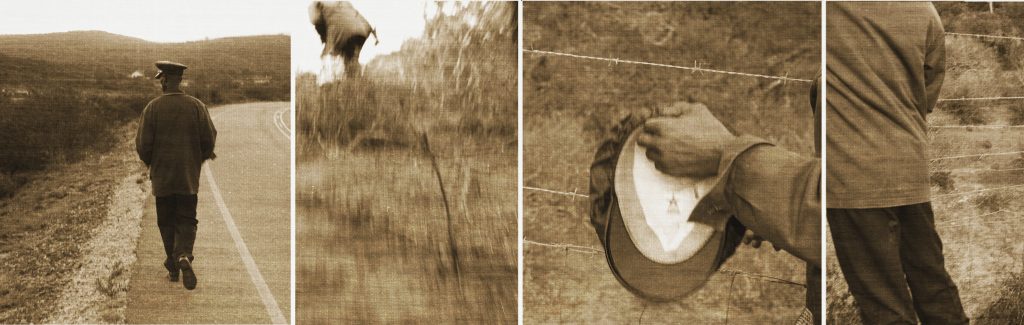
    In Tyelera they took me to the old graves, some behind colonial-era buildings, others next to the R343 heading towards Kenton-on-Sea viz fleeing Makhanda, some so concealed within unpeopled forest and at such a commanding distance from where Tyelera’s present Black population resides only the lone daring hunter and village historian would remember the coordinates, wading for long stretches at a time through stubborn foliage and the tricky sideways gravel footing, my ZCC cap-wearing guide keeping his inferential talk going as he hand/foot-flicked one isiphingo branch after another ‘ntsinde shrub aside until we started running out of saliva and had to make do with our own private thoughts – Funisile Khathu took me to eMqwashini, on the Rippley Farm, belonging to a settler-descendant farmer who, Khathu knew in no uncertain terms, would grant us access on any day and so we stole through the unflinching fence as the sun on our right segued into a vadoek mud-toned … Yet again, to plus another opportunity inviting a flare up of colonial scars, Khathu pointed at gaping holes where the only explanation was that the graves were derelict, the ground long overdue in starting to cave in, and, he would add, for my benefit, even though the farmer tilled the land when he chose to uwuhloniphile lo umqwashu and the gathering of stones around it and so it was clear the farmer never went near the milkweed tree with his tractors … In another vivid moment as Khathu and I rifled through a roadside edge of the forest, small, unassuming stones suddenly appeared at our feet and my guide was quick to halt his walk and declaim

    : Here, here are some of the other graves I told you about. You see

    [pointing over the fence]

    [me looking his way, standing to attention two footsteps away]

    now this farmer won’t allow us to go through the fence but look closely, there they are

    [Khathu pointing before him]

    [me same posture]

    you can see the arrangement of stones, of course the people who died here weren’t buried with fancy headstones so we’re not going to see that, but look

    [still pointing while his face is turned to me]

    [same posture me]

    people are buried here

    [face now turned towards the graves]

    [walking ever so slowly towards where Khathu is pointing]

    these stones mark their burial sites

    12. I am assailed by voices ceding to informatics the task of quantifying the unquantifiable, fervid notations of all sorts of facts that torment me with their unstated realisation that the death register is already full of strangers’ names and not enough rigour will do justice to one’s grieving – to get into that subconscious region, as Marechera says, a region where a ghost has rights

    13. What Lesego Rampolokeng calls graveyard upheavals of self-revelations do not come easily, what with processing death in an age of digital infinitude, our lives ever whirling in constant flux

    : given our terms of reading the everyday, when we react to the moment in a clickety-clack of views, condemning the whole to a jumble sale, the Limbo of the Fathers narrowed down to one canonical gospel … Sihlala kwabafileyo only to help contextualize our foraging, writing reconstituted as a court appeal, a rural writer pleading on behalf of his own worldview

    14. Syl Cheney-Coker’s impression that the graveyard also has teeth rests on an appreciation of the grave as the penultimate terrain on which Black rural lives are irrefutably manifest as dis/continuous in their fabrication, the cemetery as cardinal seat of amaXhosa cultural heritage – lineage, in this case, can be interpreted as drawing its power and validity from death, one’s clan praises as evidentiary of the villager’s embeddedness and oneness with place, neither placing on death a severe if fragile finality, thereby rendering the dead completely quiet in influencing events in the living world nor exerting undue reliance on the masquerades of memory

    15. It is true that my epitaph in lieu of visits to my father’s grave owes its germination to the very thesis underpinning death in the rural imaginary: not only do we believe living continues even after death but it is in the dead that resistance to our subalternity is best crystallized

    16. What Mqhayi waseNtabozuko means when he reminds us that We amaXhosa never die, for death to us is profit and gain,/ for there we get our strength,/ for there we gain our speed

    17. To argue that graves, as emblematic of rural in/visibility in both Tyelera and elsewhere, authenticate the dead as crucial participants in the behavioral economies of the living is to repudiate that perception of the Mandelafrican village as nugatory, silent in matters of nation-building, counteracting the primacy of the settler’s framework of worthiness, that prevailing fantasy of an unpeopled countryside available for capture and definition, accentuating those human figures who appear to blend into the natural environment so that even when we see these villagers afforded some visibility, we don’t really see them as they are invisibilized by their surroundings,  their dispossession justified by the very location that defines their being

    : a world of bizarre customs as ogling prospects, beholden to NHC protectionism if not exotification

    : of Contralesa paternalism dressed as indispensable benevolence

    : of broken English, a world that has to apologize for its poverty, a world that gets by thanks to the outsider’s affirmation and rescue, appealing on its knees in Sassa offices

    :  of long queues outside the clinic, of bad roads, of overcrowded classrooms, of skinny goats, of barren farming fields, of absent fathers, of grandmothers left to raise their daughters’ children alone

    : a world that has accepted its place in the isolation cell, ever folding its hands on laps outside the helper’s office, eagerly anticipating a bank notification

    : a world that has learnt the meaning of silence, embracing its muteness with the bum jiggle and spit on its calloused palms come the MEC’s visit

    : a world no one wants to belong to

    : a world of shame

    : a deadened world

    : a world, ultimately, that is absent

    18. To pay a visit to one’s family graves, then, is to summon into presence the physically absent in a way that reasserts the validity of one’s ways of knowing – what T. Spreelin Macdonald, in considering Vonani Bila’s Jeanette, My Sister (about the death of Bila’s youngest sibling, who is buried between two houses at Bila’s Shirley Village of Limpopo, her grave marked with two flat stones), calls A LABOR TO RESURRECT AND INTERACT WITH THE DEAD, thereby seeking to affirm a persisting bond between [Bila and his sister] that resists [Jeanette’s] sinking into absence

    19. I quote from the City Press series Faces of Marikana, about a miner born in the village of Paballong, near Matatiele

    : Thabiso may have known that he was going to die

    In his modest shack in Nkaneng a few months before he was killed

    , he told his wife

    , Mma Kopano

    , the mother of his only child

    , whom he lovingly always called Dear

    : Respect me when I’m dead

    : Respect my grave
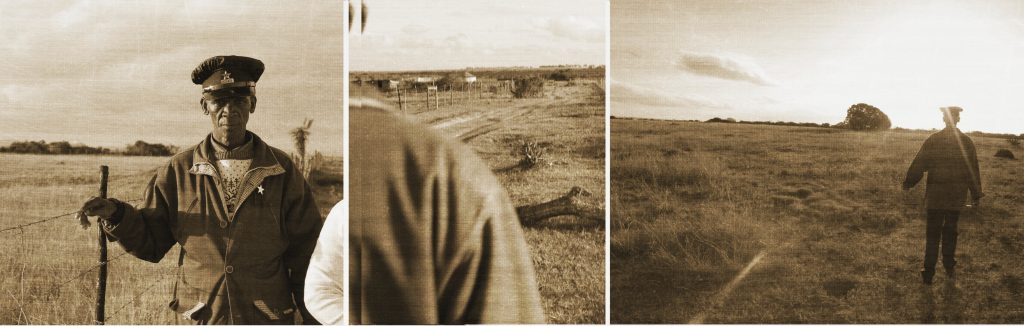
    A pre-ending and an alternative lie, who is Joy and who is Joyce?

    : The dead won’t sink

    They keep returning to the surface of the dam, some as skeletons, some bodies half-decomposed, floating aimlessly or otherwise circling the dam in search of familiar faces, still in their tattered burial blankets of ox-hide; whole families dead during a famine or the last tribal war in memory – after the year’s harvest, the villagers in the dam come alive and talk with the living, asking them for updates of the year they missed out on, parents admonishing children for missing the last festival a year ago, patriarchs leaving orders for what is to be done with their livestock and land in their absence, miner-husbands conferring with housewives, great uncles answering to suitors who had come, in their absence, to ask after the hand of an orphaned granddaughter in marriage, fathers laying charges with the chief’s emissary for wives they suspect to have committed adultery without their expressed consent, fathers discussing the next suitor for their wives, matriarchs informing their sons of women they wish to be their next wives (friends’ daughters, women from other villages … domestic worker-women they consider to be lifelong younger sisters), young boys forlornly watching their former love interests carrying babies they did not father, men who died as boys waking up to confront younger brothers who now have as much hair on the sides of their faces as … fathers who “left” under mysterious circumstances and might still be suspicious of their wives’ skills in the cooking compound and finally the chief, when he elects to speak, rising from his throne to lament that the affairs of the land are going in the direction of the unknowable … a dot of wet mud is made by dipping a finger in the shallow waters and pressing it on the centre of your forehead, as sacrifice withal

    In this dream, I am the only one tasked with going around the dam and striking up random conversations with those who have no relatives around or beef with anyone present

    20. A version of the present free of the anxiety to belong to any absolutist trope, given an incongruous understanding of time and space as they operate within a rural setting in discoursing around the settler notion of African hegemony, as defined by not just a recreation of past models by way of manufacturing somewhat idealistic future modes of being, this onrush of tired whimsicality still caught up with the need for Western science to correspond to our rationality-defying present

    , hence we look back there

    really look

    to finally see how, in navigating the forest of stereotypes that weigh down the rural, the absenting of our ancient ways in reading the world

    , IT IS THE DEAD WHO BEAR WITNESS TO OUR LIVING

    , less the living eyewitness thereof

    : as if the names, the gestures, the places, and the time, having bloomed separately in simple maxims, were for an instant to accept being united under a common law so that one would know finally, as in the hard light of a blunt interrogation, who made what, where, and when (Jean Frémon)

    When I was finally taken by Khathu, late in that June 14, 2017 afternoon, to the home of Ntayise Dyakala, a member of the Salem Community Property Association, the body that had been fighting to reclaim 66 square kilometers of land on behalf of the Black residents of Tyelera since 1998, early supper was served with a spoonful of sepia memories of those who’d experienced firsthand the Fourth Frontier War that robbed Tyelera’s Black community of a portion of Tyelera they had occupied pre-1812 and which now belonged exclusively to settler descendants, among them the white owners of Kikuyu Lodge and the commercial farms tracing their title deeds after the wars of dispossession, those owning the forests and roadsides where much of Khathu and my decolonial flesh fictions on rural persecution occurred … the next morning, as Ntayise Dyakala and I entered his ancestral graves at the Bradfields Farm, besieged by a selfish need to construct a more concrete and less ah ngimnandi testimony verifying MY EXPERIENCES of death within a rural space, Ntayise Dyakala furnishing me with one explanation after another about these or those family graves, a gospel of plangent cracks, to witness Black anger materialize at the crunch of a footstep on gravel, polluted as we are with grief (Wopko Jensma), forever feuding against the rural’s marginalization

    ; to palliate the spirits of our upbringing, percolating with vehement repudiation at conventional ways of mourning, of remembering, of seeing, to have the revelation penetrate your bones, milking the marrow

    : WHEN IT COMES TO RURAL LAND REFORM THE REAL MEAT IS OVERWHELMED BY TOO MANY FLAVOURS

    I remember telling myself with a clarity borne of having seen too many burial sites and heard enough oral testimony the previous day

    : Kakade there was a community of Black people living on the Salem Commonage phambi kokuba iTyalera became Salem

    20. Song, here in the form of a prayer, says Marian De Saxe, of Vuyisile Mini et al approaching death as if enthusiastically, is transformed into A SHOW OF STRENGTH AND PROTEST AND HOPE, in much the same way that Nkosi Sikelel‘ iAfrika evolved from a prayer to a liberation song to an anthem … SINGING ONE‘S WAY TO THE GRAVE is also A DEFIANT ACT of altruism WAITING FOR AN AUDIENCE TO ACT, as ASSERTION OF EXISTENCE AND BEING

    Among his old family graves, Ntayise Dyakala says to me

    : They were all buried here before we were forced away. You see

    [pointing over to the most recent grave]

    [me looking his way, listening]

    you can tell from that name we’re not the only ones

    [the Dyakalas]

    who have family buried here
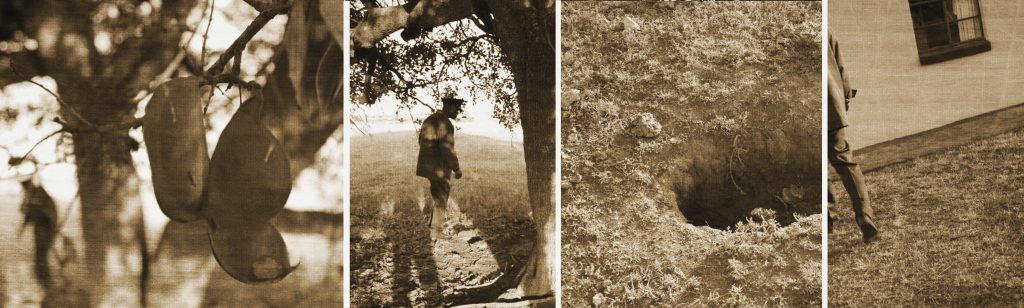
    I wanted to understand what this assertion of the unbreakable connection of identities between the dead and the living … not LEAVING … meant regarding how the villager processes death so far as it concerns the ways in which we collectively shape current rural identity, memory included … to commune, so to speak, with the graveyard of relationships that inform my philosophies … I have been considering the place a grave occupies in the rural worldview long enough to know that the grave has, overtime, shifted its position from the venerated to the diversionary, from when one feared pointing at the graveyard (or did so with a crooked index finger so as not to “provoke” the wrath of those “asleep” in the cemetery) to a familiarity such that communal grave-digging sessions back in my village can turn rowdy without fear of ancestral retribution ever figuring into the transgression … It is never clear, in weighing the cost of my silence on how dying remains a unifying force in rural communities, if presiding over Grave Crimes Against [my] Struggle is to set myself up on the dock, giving evidence against my other selves on the witness stand, prosecuting on behalf of my ideals: disputatious thinking, sure, offensive to the senses, but nonetheless a grave narrative of mis/counting the funerals I’ve been to and those I’ve missed and those I don’t remember attending; to get close enough to the edge of the abyss and consent to what memories, quotes, scents I carry to suggest a redefinition of the borderscape

    Caught in the maze of unbearable absence (Joseph Guglielmi), in remembering those I love and am linked to by blood, talking Black rural death is a means of expression at grief’s disposal, what  Maurice Blanchot would call the gentle madness of remembering forgetfully … rural death in this case cannot be measured as pure and simple loss … it has to mean more

    : Where is the least power? In speech, or in writing? When I live, or when I die? Or again, when dying doesn’t let me die?

    22. The accused is not my father (Ah Chul’unyathela, Malamb’edlile!), retired as he is to his absenteeism … but a son who has seen with the eternal corner of the eye too many things I instantaneously consigned to the back of my mind, still working the treadmill towards the finitude of my understanding, taking that short walk to the grave, only a rational thought away … Only a strong feeling away … Meeting all the versions of yourself which did not come out of the womb with you … Those who wear their skeletons on the outside

    23. Sithetha nge mvuma ‘kufa, nge insurrectional avowals, nge tjotjo estrongo for only uVerwoed

    : Love is found even where the dead lie

    24. Using death in the service of a search for empowering beliefs about the rural, rejecting the imprisoning notion of the villager as meek effigy, excavating scraps of Black rural voices babbling polyglot-al to polemical effect, taking up the associative inquiry of our grazing living

    , not those voices who confront without necessarily dislodging even in praise of the threat of forgetting, aware that the infiniteness of the threat has in some way broken every limit

    : The fly that has no one to advise it follows the corpse into the grave

    The Tyelera moment teaches me to neither fear the final day nor wish for it – death is the temporal villager in the city, wandering in a warren of exile-forced solidarity with the world and the multitudes of identities that intersect at his heart, a raucous, if consistently improvisational, montage of maestro boasts regardless of the limits of his migrant-mobility, using an assertive language to solidify fragile networks of thought-currency, twisting lines of not forgetting into twines of punishment and that awareness

    : IT IS NOT POSSIBLE TO QUIT THE ANCIENT IDENTITIES

    Question me on how we read the present

    , suggest to me the need for a rural-bound and unabashedly intrusive manipulation of memory

    , to clean up the canon of limited and limiting beliefs about the rural

    , to entice redemptive reports around village living

    and not this perceived neutrality that comes with merely curating the act of rural typecasting at the expense of pushing against our consignment to the bottom of the page/afterthought paragraph/back of the museum

    : There can be this point, at least, to writing

    , says Blanchot

    : TO WEAR OUT ERRORS

    Ever the trier of the Quenellian fact of constraint, the second day, leaving by way of Makhanda, on the road, early noon, Ntayise Dyakala with his son, I REMEMBER: abantu abadala bagqiba = sivile = siyavuma = UMNTWANA UDE WABA NGCONO … a raindrop of a motive sneaks up on me with the politeness of an anus pump, to retrain the bowels as I am third-worlding on the R343

    : History, the stockpiling of daily events, works in the moment and the moment belongs to the present; those who mourn must learn to appreciate the dead before they can appreciate the livingwe’re not made to talk or write for eternity, but for the moment, and it’s the accumulation of moments that makes continuity: Edmond Jabès

    everything has changed except the graves: Mzi Mahola

    not dead but sleeping: Anna Della Subin

    the dead ones who are not dead, the sleeping ones who are not sleeping: Nichols

    endlessly signifying what is absent: Frémon

    the point of this discussion is that she did not die: Georgia Anne Muldrow

    you’re dead, Kintu rebuked … what have you come back for: Jennifer Nansubuga Makumbi

    25. The past to which we were subjected, which has not yet emerged as history for us, is, however, obsessively present (Edouard Glissant)

    26. Says Mzwandile Matiwane, in To My Sisters? Once I am dead/ urinate on your hands/ and wash your faces/ and cleanse off the curse/ that has befallen the AmaNqarhwane clan

    Says Mandla Ndlezi, in When It Comes? O, dig it/ like a cave/ and let me squat/ inside and wait. // Snugged in/ animal skin/ ready to/ get up and go!

    27. Satisfied, I came among my guests like a man who has returned from the grave to complain about the death certificate … In Black Sunlight, Marechera

    28. It is in Alfred Qabula, being of Flagstaff, rural Transkei, that we see someone wholly underplay the factsheet of his grieving, making it clear that to count the bodies of the dead has already exhausted its effectiveness, that addressing the elusive monster, mano a Cde, can be another approach in foregrounding the heart’s clangs of pain

    : Death

    enemy of man

    Woe unto you …

    then

    29. There is no use arguing the case of our social death if to be alive means even our births are already suspect

    30. On the threshold of a rejected birth

    , says Jabès,

    we write in the shadow of what has been written, but never read

    In his dissenting judgement when the Tyelera land claim came to the Supreme Court of Appeals in Bloemfontein in February 2016 (the commercial farmers and lodge owners of Salem appealing the Land Claims Commission’s original ruling in favour of the Tyelera claim; majority judges in the SCA assenting to Tyelera’s claim), Azhar Cachalia, Judge of Appeal, weighs the evidence of two witnesses for the Tyelera community in the following manner

    : In response to a further question as to how Salem got its name, he answered almost as a child telling a story wouldHis evidence was difficult to follow, perhaps due to his lack of education and literacy … the sequence of events itself is bizzare … Nondzube’s hearsay evidence was relied upon to … He is uneducated and his evidence was not easy to follow …

    I quote Cachalia in one lump of mangled quotations especially to show how the infantilizing of Msele Nondzube and Cachalia’s insistent valuing of formal education in discrediting Ndoyityile Ngqiyaza’s testimony points to a larger problem in how Mandelafrican rural people suffer most rampantly under essentialised notions of identity, even to highlight the parts that verify how the methods of rural memorizing can never be authenticated in Romanesque scrolls but that which is lent and borrowed through story, gesture, personal moment, dream, ritual and myth, the past kept contemporaneous one generation after another even as memories fray

    31. Says Motlalepula of Boroeng village and brother to Khanare Monesa, slain during the Marikana Massacre, Khanare’s wife already with child at the time of Khanare’s passing

    : My only hope is that when his child is born, he’ll look exactly like him

    : The child will be a reminder to all of us that we once had a beautiful brother who was killed


    Research for this essay was supported by a grant from the Taco Kuiper Investigative Journalism Fund, run by Wits Journalism (Wits University).

    All pictures feature Funisile Khathu and were taken by the writer while visiting some of the graves belonging to Tyelera’s African population.


    Reading List 

    Where White is the colour/Where Black is the number, Wopko Jensma, The faces of Marikana, City Press, Born in Africa but..: Women’s poetry of post-Apartheid South Africa in English, Isabelle Vogt, Nomvula, Freshlyground, Black Insider, Dambudzo Marechera, My Spirit Is Not Banned, Frances Baard as told to Barbie Schreiner, No mining in Xolobeni, demand activists, GroundUp, Collected Poems, Alfred Temba Qabula, South African History Online, These Hands, Makhosazana Xaba, Eulogy, Grace Nichols, Salem Party Club and Others v Salem Community and Others (2017, January), Salem Party Club and Others v Salem Community and Others (2017, December), Not dead but sleeping, Anna Della Subin, Caribbean Discourse: Selected Essays, Edouard Glissant, Johann Louw paints as counter-feminist and settler fantasist of sorts, Percy Mabandu, Ah, but your land is beautiful, Zamansele Nsele, Habari Gani Africa Ranting, Lesego Rampolokeng, Steve Biko and Black Consciousness in Post-Apartheid South African Poetry, T. Spreelin Macdonald, The Graveyard Also Has Teeth: With Concerto for an Exile: Poems, Syl Cheney-Coker, Umfi uMfundisi Isaac William Wauchope, SEK Mqhayi, Sing Me a Song of History: South African Poets and Singers in Exile, Marian De Saxe, When It Comes, Mandla Ndlezi, Kintu, Jennifer Nansubuga Makumbi, To My Sisters, Mzwandile Matiwane, Writing At Risk: Interviews Uncommon Writers, Carlos Fuentes, The Dead Protect Us!, Daily Sun, Endlessly signifying what is absent, Jean Frémon, The writing of the disaster, Maurice Blanchot, An Uneducated Discourse, Xola Stemele, The book of remembrances remains to be written, Joseph Guglielmi, Arrow of God, Chinua Achebe, Itineraries of a Hummingbird: an interview, Edmond Jabès, Everything has changed (except the graves), Mzi Mahola, A Thoughtiverse Unmarred: Prologue, Georgia Anne Muldrow, Memory of a dead memory, Edmond Jabès, Hybridity and Transformation: The Art of Lin Onus, Bill Ashcroft