Author: lungiletech

  • Neo Muyanga – The Sex For Money No Power Mixtape

    PASS founder, a composer and musician Neo Muyanga highlights the currents and transactions between the physical and the metaphysical, the lustful and the learned, the sensual and confessional and all matters philosophical, sociological and political in this powerplay.  

    “Obia Ba Nnye/Naughty Child” – Desmond Ababio

    “Mentirosa” – Concha Buika

    “Le Buste” – Jean Cocteau/Dj Spooky

    “Die Ballade Von Der Sexuelien Horgkeit” – Kurt Weill

    “Sexy Sadie” The Beatles

    “Yaphel’imali Yam’” – Busi Mhlongo

    “Gimme My Money Back” – The Treme Brass Band

  • Revisit moments from the PASS landing in Amsterdam

    From 11 -15 December 2016, the Pan African Space Station transmitted live in Amsterdam from the OBA Central Library.

    PASS is an experiment in speaking, listening, playing, partying and community, featuring collaborations with artists and rebels whose practices draw from and respond to a variety of contexts; prompting us, through performance, conversation and other forms, to imagine how worlds connect.

    Listen to Kodwo Eshun further entangling our imaginations with ‘Music of Resilience’, recorded on day two of the intervention. For more from PASS in Amsterdam, please visit our Mixcloud.

    Other contributions include ‘Black Stereo’ (Jimmy Rage and Bamba Al Mansour), Chandra Frank, Franck Biyong, Sammy Baloji, Akinbode Akinbiyi, Faustin Linyekula and Jose Pereelanga paying tribute to Franco and TPOK, Amal Alhaag and Maria Guggenbichler reminding you to ‘Count Your Blessings’, Angele Etoundi Essamba, ‘Protest Pop’ with Neo Muyanga, Em’kal Eyongapka, Aurelie Lierman and many many more. More about the landing can be found here.

  • Udaba with Kgafela oa Mogogodi – LIVE at Centre for the Book, Cape Town (2009)

    On 1 October 2009, Pan African Space Station hosted Udaba at The Centre for the Book, Cape Town.
    Udaba was a musical flurry of passion, soul, soothsaying, truth-telling and jazz poetry that takes you on flights of improvisational abandon. Their politically engaged elegies fused vernacular lyricism, Xhosa praise singing and African indigenous music on jam-like sets with a rotating crew of regular collaborators. Udaba drew their inspiration from Xhosa literature and they referred to their music as Umculo Buciko (musical essays).

    For PASS, Udaba collaborated with spoken-word author and filmmaker Kgafela oa Magogodi.

    Ubada have since disbaned, but two of the five founding members, Liyo and Pura hasve formed Izithunywa Zohlanga (Messengers of the Nation) to use indigenous repertoire and idioms to produce music and literature that speaks directly to the present in post-Apartheid South Africa while at the same time being custodians of our heritage through performances. Koketso Potsane writes on the new duo here

  • Denderah Rising with Georgia Anne Muldrow + Thandi Ntuli Quartet + The Monkey Nuts


    In April 2018, PASS welcomed back Georgia Anne Muldrow and her “ancestral orchestra” feat. Thandi Ntuli Quartet and The Monkey Nuts to Pan African Space Station (PASS). Below is an excerpt of that night. Breathe!


    For more visit the Pan African Space Station.

  • Genres of the Human


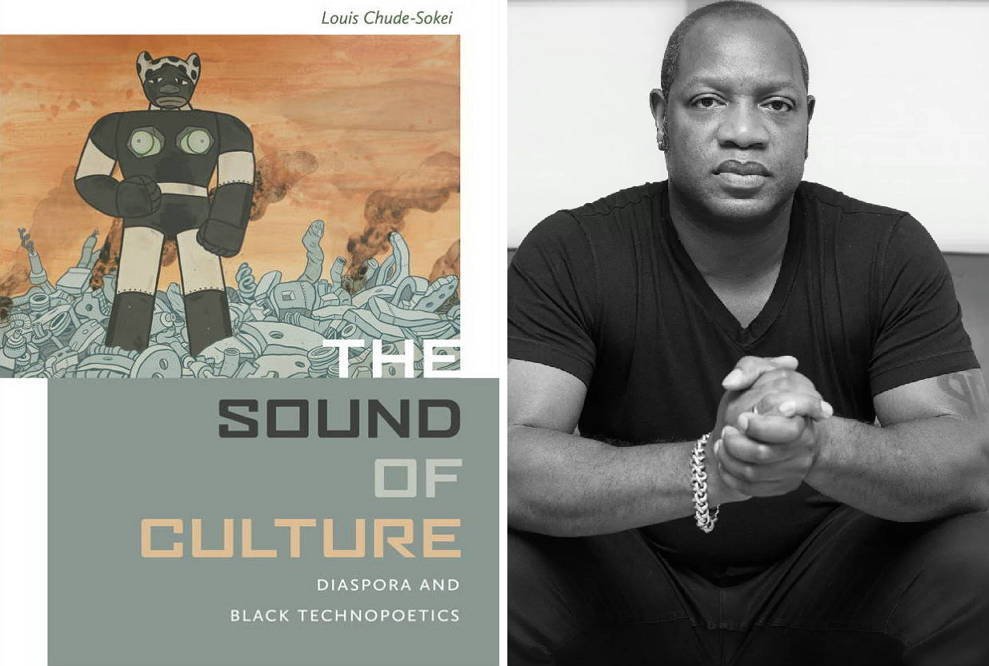
    In his new book, The Sound of Culture: Diaspora and Black Technopoetics, Louis Chude-Sokei samples freely from history, music, literature and science, conjuring new meanings from dead texts, to build an echo chamber where the discourses of race and technology collide. At a time when automation threatens jobs and pits humans against machine and Artificial Intelligence systems manage financial markets, Chude-Sokei’s arkeological excavations reverberate through the future-present. In this conversation, he joins Kodwo Eshun and Appau Junior Boakye-Yiadom on a journey into science fiction and Afrofuturism that engages the intimate relations between black peoples and technology within the wider imperial histories of industrialisation and slavery.

    “What then comes up for me in this conversation about the limits of the human is what constitutes the human, right? Because whenever you ask whether or not this is human or that is human, you’re actually asking “what is the human?” in the first place. Which is a question that we still don’t really know. The same thing when we talk about artificial intelligence. What artificial intelligence has taught us is that we don’t know what intelligence is. Whenever we encounter a machine, can it think? Does it have a soul? And then the question becomes: well, what is thinking? What is a soul? Are they human? Do they merely mimic us? Will they take over from us? Will they revolt? These same exact questions that were asked about slaves during slavery. This is not an accident. Things that seem accidental are not accidental at all. It’s a shared logic around a restrictive understanding of what constitutes the human. And that’s where blacks and robots and machines really come together – not just in a clever, theoretical formulation. It’s there in history. It’s why Robert Johnson wants to have sex with his phonograph.”

    Read more from an edited transcript in The Chronic: The Invention of Zimbabwe.

    [hr]


     The Chronic, “The Invention of Zimbabwe”, writes Zimbabwe beyond white fears and the Africa-South conundrum.

    The accompanying books magazine, XiBARUU TEERE YI (Chronic Books in Wolof) asks the urgent question: What can African Writers Learn from Cheikh Anta Diop?

    To purchase in print or as a PDF head to our online shop, or get copies from your nearest dealer.

    [button link=”http://www.chimurenga.co.za/chimurengashop” color=”red”]Buy the Chronic[/button][button link=”http://www.chimurenga.co.za/subscribe” color=”red”]Subscribe[/button]