

Published by Chimurenga, the Chronic is quarterly pan African newspaper that gives voice to all aspects of life on the continent and celebrates our capacity to continually produce something bold, beautiful and full of humour.
Produced in Cape Town, Johannesburg, Nairobi, Paris, Lagos, Yaoundé, Accra, Kinshasa, Dakar, Kampala and Delhi, and distributed globally, it seeks to write Africa in the present and into the world at large, as the place in which we live, love and work.
The new issue, available now, features reportage, creative non-fiction, autobiography, satire, analysis, photography and illustration to offer a richly textured engagement with everyday life.
In its pages artists and writers from around the world take on the philanthropic complex to unravel the philosophies of dependency and power at play in the civil society of African states. Paula Akugizibwe assumes observer status at the African Union to uncover the charm offensive that keeps the West in control, while Parselelo Kantai exposes the manufacture of post-election peace in Kenya. Also, we journey into the AU headquarters in the heat of the political crisis in Mali and speak with Raila Odinga about the arithmetic skills of Kenya’s Independent Electoral and Boundaries Commission.
Elsewhere Yves Mintoogue and Adewale Maja-Pearce diagnose the First Lady Syndrome in the political patronage of Chantou Biya and Dame Jonathan; Agri Ismaïl eavesdrops in on Islamic finance after the market crash; Deji Toye looks at the Nigerian art of patronage; and Cédric Vincent exposes the political rhetoric that caused all the chaos at both Benin biennales of 2012.
As an alternative, three pan-African art projects overcome maps and institutional bureaucracy through networks and synergies; Ghana’s controversial duo FOKN Bois fuck with the puritanical mores in the world’s most religious country; and we listen in on the rebirth of the new thing in Cape Town’s jazz scene.
The Chronic also goes back to university to recount seventeen stories of love and learning under the World Bank and interviews Fred Moten and Stefano Harney on the possibility of staging a revolution “with and for” the university.
The wide-ranging sports coverage kicks off with Bongani Kona’s reflection on Zimbabwean players in South African rugby. In addition, Simon Kuper points out Africa’s best footballers aren’t African and Akin Adesokan learns 24 tricks of the forehand from Roger Federer.
The stand-alone Chronic Books magazine is a self help guide on reading and writing. Learn how to be a Nigerian from Peter Enahoro, Nigeria’s ‘woman of letters’ and the masters of Onitsha Market Literature. Get advice on how to live and how to write from Mohsin Hamid and Werewere Liking; meet the next generation of playwrights; and find out why you should be reading Ken Saro-Wiwa, Jose Saramago, Eric Miyeni, Andile Mngxitama, Gonçalo Tavares, Vivek Narayanan, Nthikeng Mohele, A. Igoni Barrett, Abdellatif Laâbi, Gabriela Jauregui and many more.
Get the print addition of the Chronic from select retailers throughout South Africa (including Exclusive Books, selected Spaza, independent bookstops and on the street in the first week of release), as well as in select shops in Abuja, Lagos, Nairobi, New York, London, Berlin and The Netherlands (get a for a full list of stockists worldwide here).
The Chronic is also available as both a print and digital edition in the online shop.
The Chimurenga Chronic is funded by the German Federal Cultural Foundation and the Goethe-Intitut.


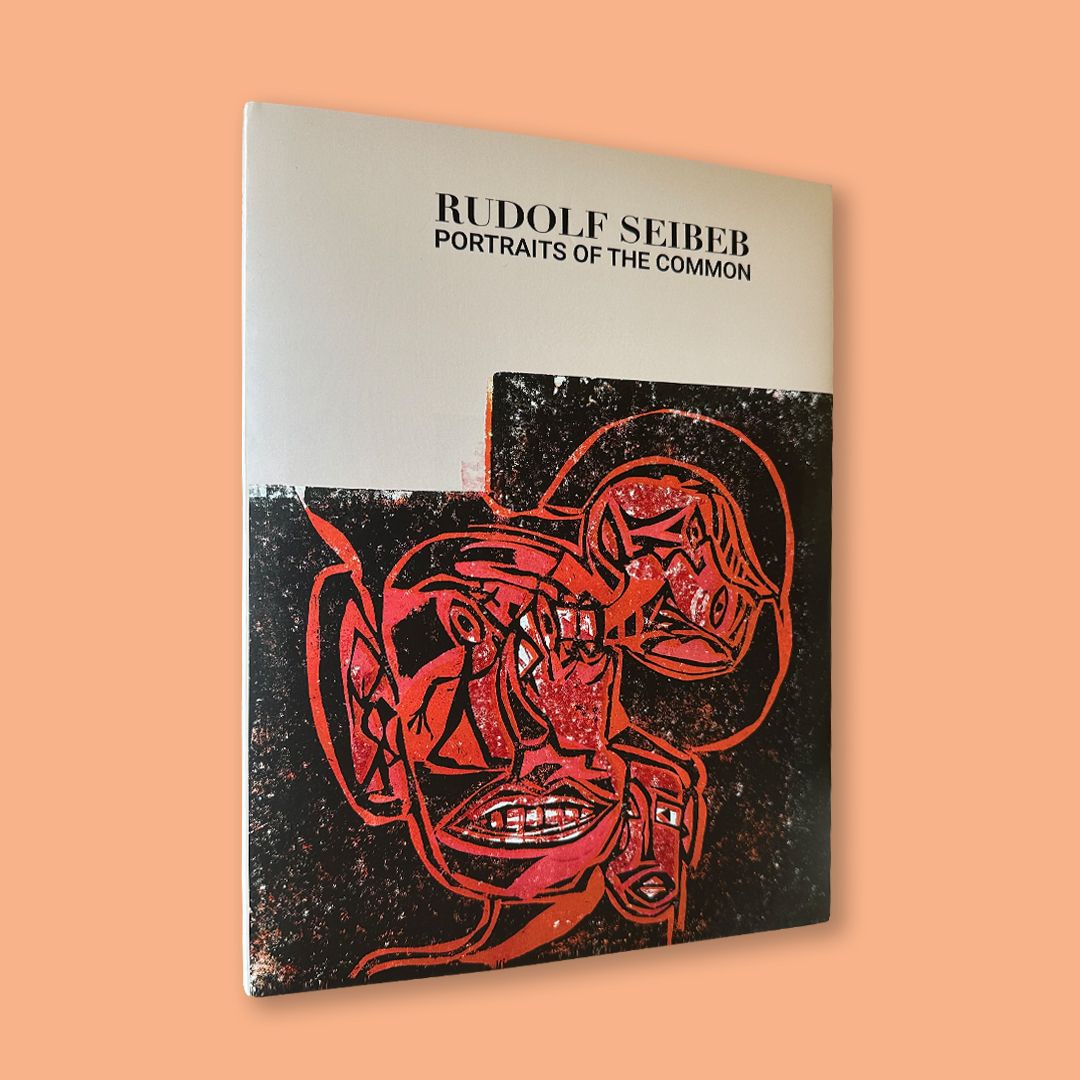
The ARAK Collection, in partnership with Hamad Bin Khalifa University Press, announces the release of Rudolf Seibeb: Portraits of the Common, a study of Namibian artist Rudolf Seibeb and the communal, material, and historical forces that inform his work.
Born in Okahandja in 1964, Seibeb has developed a practice rooted in everyday encounters, social memory, and an inventive use of found materials. His portraits and assemblages reflect the tensions, humour, and shared humanity of the world around him.
This publication presents new writing, interviews, and full-colour documentation that together illuminate the depth and trajectory of his practice.
In his foreword, Abdul Rahman Saleh AlKhelaifi, Founding Director of the ARAK Collection, reflects on the quiet precision of Seibeb’s vision:
"His art documents the often-overlooked moments in dailu experience, connectiong viewers acrss distance and background."
Seibeb shares, “What inspires me is human relationships my daily encounters with people. For me, every person is the same… The faces I paint are treated equally, no matter the background.”
Writer Ashraf Jamal describes the complexity and candour of the artist’s universe:“To enter Seibeb’s world is to meet both clarity and ambiguity. He neither instructs nor persuades; he simply presents what he sees.”
Seibeb’s work weaves individual experience with public life. Curator Jamil Osmar Parasol highlights his ability to translate political and social pressures into symbolic imagery.Namibian curator Frieda Lühl underscores his relationship to the natural world, noting the recurring animal symbols that reflect his ethos of balance and coexistence.
The publication brings together multiple voices writers, curators, and the artist himself to map Seibeb’s journey from his formative years at the John Muafangejo Art Centre to his expanded role in Namibian contemporary art. Newly photographed works and studio reflections provide readers with direct insight into his methods and materials.