

The Chronic is a one-time only edition of Chimurenga which takes the form of a speculative newspaper. Back-dated to the 18-24 May 2008 – the first week of the xenophobic violence across South Africa three years ago, the Chimurenga Chronicle is an opportunity to provide the depth of reporting and analysis that should have appeared during this period. The newspaper also looks outward – covering events, scenes and situations from around the world during this period. And it launched today!
It was Sun Ra who said it a long time ago: “Equation wise, the first thing to do is consider internal linktime as officially ended… we’ll work on the other side of time… we’ll bring them here through either isotope, internal linkteleportation, transmolecularzation… ” . The time was 1974 and Space was The Place. A prolific jazz composer, bandleader, philosopher, afronaut and historian, Ra was ahead of his time.
Almost four decades later, it is increasing clear that time, once thought continuous, is actually marked by radical disjunctions and overlapping time-spaces. What’s more, the tools we have at our disposal, particularly in the area of knowledge production, do not help us much to grasp that which is emerging.
What we need now is a Time Machine! A device that will allow us to work “on the other side of time”, to discover possibilities for new ways thinking through the “having been and yet to come.”


The Chimurenga Chronicle such a machine, a once-off edition of a speculative, future-forward newspaper that travels back in time to re-imagine the present. Both a bold art project and a hugely ambitious publishing venture, the Chimurenga Chronicle comprises of a 96-page multi-section broadsheet, the stand-alone 56 page Chronic Life Magazine and a self-contained 96 page Chronic Book Review Magazine.
By imagining the newspaper as a low-tech time travel machine, our aim is not only to reanimate history, to ask what could have been done – but also to provide a space from which to re-engage the present and re-dream the future.
The print edition includes a 128-page multi-section broadsheet, packaged with 40 page Chronic Life Magazine and the 96 page Chronic Book Review Magazine.
An intervention into the newspaper as a vehicle of knowledge production and dissemination, it seeks to provide an alternative to mainstream representations of history, on the one hand filling the gap in the historical coverage of this event, whilst at the same time reopening it. The objective is not to revisit the past to bring about closure, but rather to provoke and challenge our perception
Featuring contributions from Mike Abrahams, Olumide Abimbola, Toyin Akinosho, Paula Akugizibwe, Sello Alcock, Max Annas, Gabriela Carrilho Aragao, Ayi Kwei Armah, Sophia Azeb, Robert Berold, Marlon Bishop, Louis Chude-Sokei, Jean Comaroff, John L. Comaroff, Imraan Coovadia, Goran Dahlberg, Kwame Dawes, Jacob Dlamini, Manu Herbstein, Sean Jacobs, Neelika Jayawardene, Billy Kahora, Parsalelo Kantai, Bill Kouèlany, Jackie Lebo, Miles Marshall Lewis, Percy Mabandu, Munyaradzi Makoni, Dominique Malaquais, Lionel Manga and many more
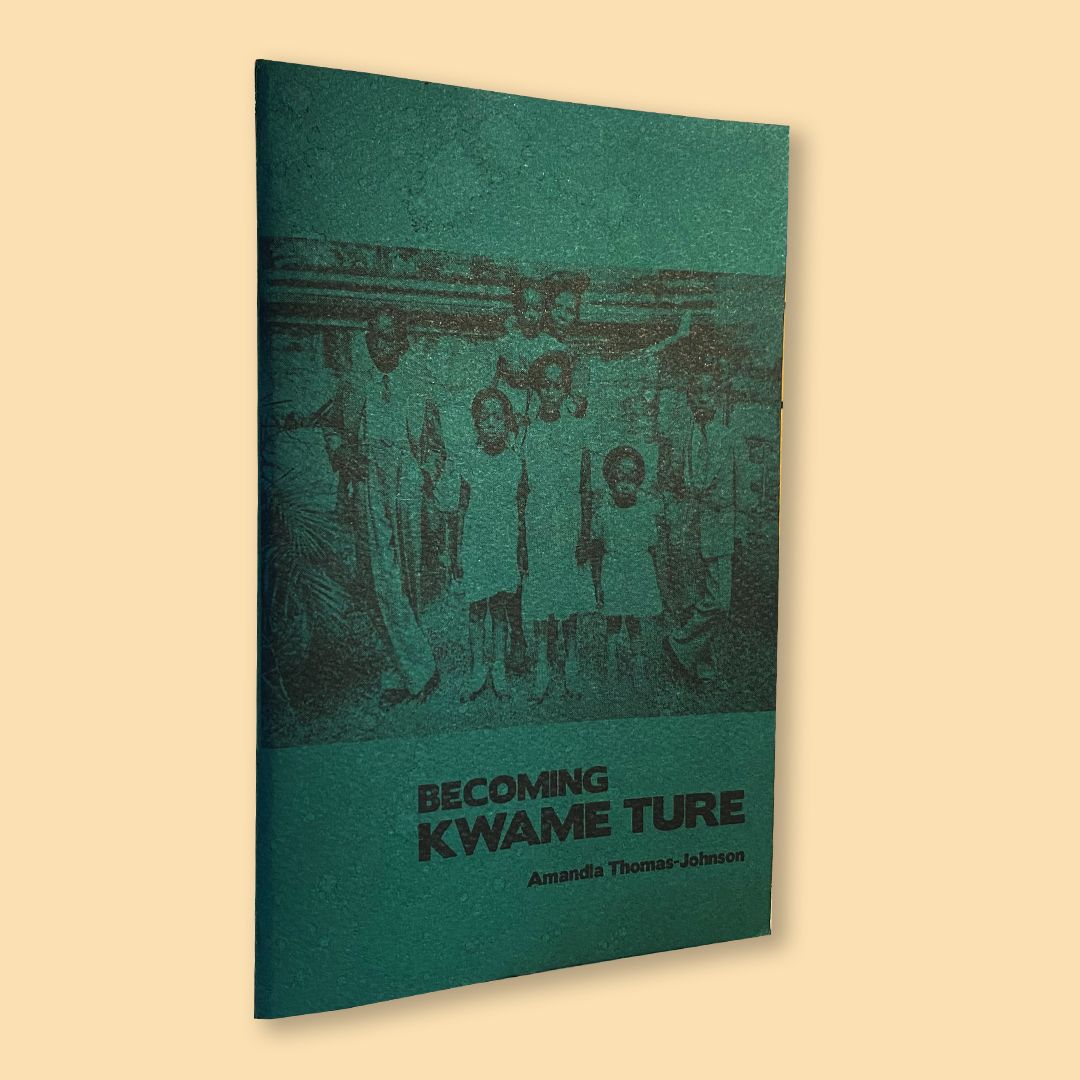
Stokely Carmichael (Kwame Ture) was viewed by many during the civil rights struggles of the 1960s as the dashing and eloquent heir to Malcolm X. His call for Black Power and his fiery speeches led to his ascension as the foremost symbol of black militancy. But the threat posed to white America by the triumvirate of Martin Luther King Jr., Stokely Carmichael and Malcolm X would be suppressed as the decade declined to a close. Indeed, X and King would meet death at the escort of gunmen, in ‘65 and ‘68, respectively, and in ‘69, Carmichael would board a plane bound for Guinea, never to return on a permanent basis.
But Kwame Ture lived on for another 30 years and he was as politically active as he had been in the ‘60s. At the time of his death, Ture had become perhaps the foremost Pan-Africanist of his day.
Why do we know so little about the last 30 years of his life?
Featuring photographs from the Kwame Ture estate and Amandla Thomas-Johnson
----------------------------
Size: 135mm x 205mm
Pages: 60pp (plus cover)
Printing: black and white
Language: English
ISBN: 978-1-990990-18-2