
Composed, arranged and performed by Neo Muyanga, this audio cd supplement was part of the Chimurenga Chronicle (October 2011) , a speculative newspaper which is issue 16 of Chimurenga.
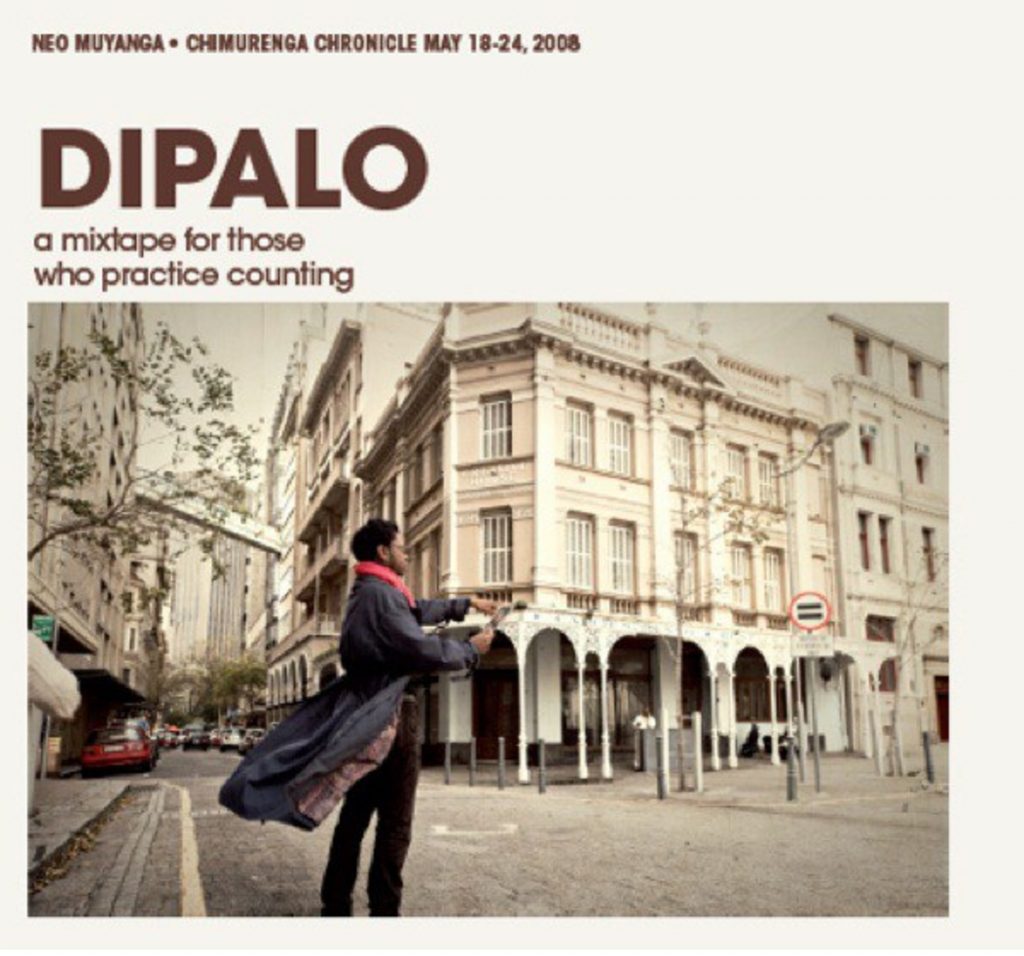
Tracklist:
a) 1+1= (a re-composition of a 5000-year-old offering to Lord Ganesha, the Hindu deity, an opener of sorts)
b) 4:7 (heaven’s on the ocean is a proportional refrain on reaching nirvana, the 7th grade, via the mundane material world)
c) 3sin= rθ (sino projection technology theme)
d) 3(x)n (illegal border crossing and migration theme. composed for dancers)
e) e=mcx \rightarrow \infty (a true story about an explosive riot day with SADF soldiers who attacked Soweto on June 16th, 1985. Composed for those who got hurt)
f) ƒ:X→Y (horizon heart aflame. Composed for a lover)
g) (a summing of random themes theme)
h) 4x+2 (the 2 or 4 step theme)
i) y~ 6/8 (a travelling theme in 6 parts over eight. Composed for puppets)
j) y\ge \!\, 6/8 (a running theme in 6 parts over 8 )
k) 1/4° (a kota bread theme. Composed for skolies and thieves)
l) (a perpetual circle. Composed for an apartheid-era multi-racial soccer club)
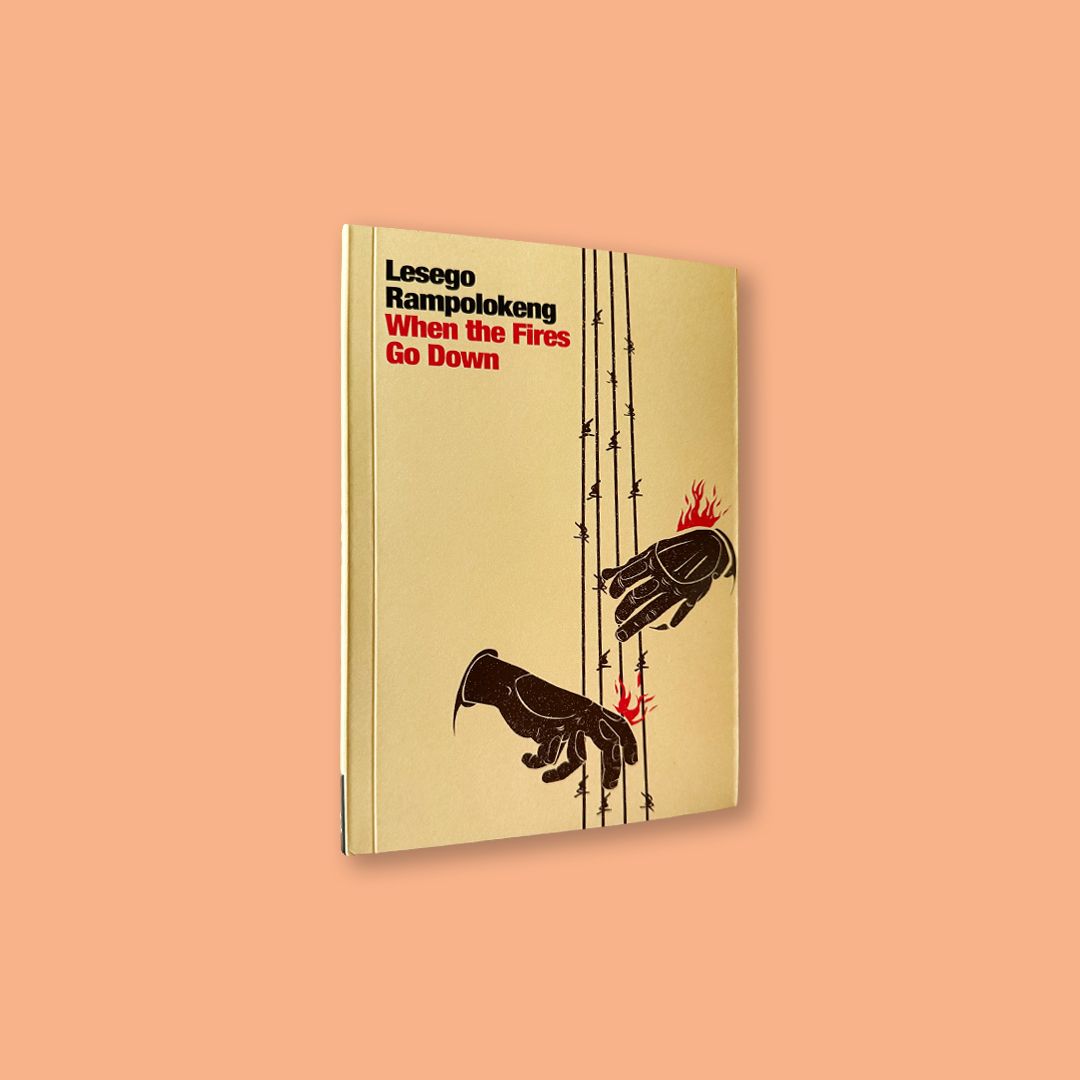
In When the Fires Go Down, Lesego Rampolokeng writes in the tense after the blaze: the hour of smoke, residue, reckoning, and the dangerous darkness that follows. The title itself carries both foreboding and aftermath—what happens when the flames drop, and what still burns underneath. Across these acute, fiery, unflinching litanies, Rampolokeng brings a relentless gaze to body, history, language, and nation, moving with precision, urgency, and a ferocious musical intelligence. The poems surge from dense, jazz-charged freedom sonics and black radical invocation into historical re-enactment, social-media derangement and repurposing, and hard street-level tribute—to Orlando West, its wounds, its styles, its unfinished struggles, a microcosm of what’s been, what is and what’s to come.
Part prayer, part performance, part poetic treatise, this is a book of conjuring and confrontation: incantatory, improvisatory, and alive with ecstatic wordplay, where high theory and low vernacular collide, where freedom is sung and interrogated, where memory returns as rhythm, scar, and prophecy. Here, Rampolokeng writes from both sides of the tracks at once—A-side and B-side, inside and outside—holding us in that crux until the mirror cracks and history speaks back.
"If there was any doubt about Lesego Rampolokeng’s important place in the literary history and trajectory of this country, the prophetic power and poetic pyrotechnics of his latest offering should be enough to suffocate such spirit of uncertainty for good." Unathi Slasha, author of the novels, Jah Hills and The Hollow Sound of Lightweight Bodies.