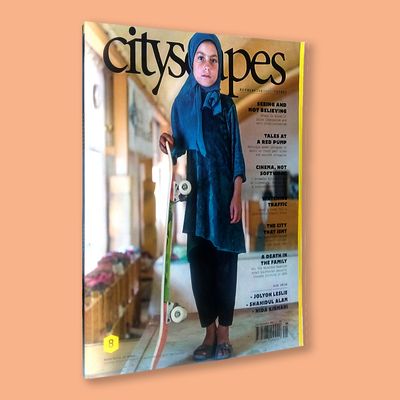
“Three generations of white South African men were bound together at that table. Vermuelen was the first generation. He defined Africa, made it safe for Basson to defile. I was the last generation, the last to grow up in segregated neighborhoods. Between us was the silent photograph of Wouter Basson. Like a distant father, Basson was absent at the dining table.” – Henk Rossouw (Hole in the White ‘Hood). Also Mahmood Mamdani on Bantu Education at UCT, Gael Reagon on sisterhood, Binyavanga Wainaina on dis-covering Kenya, Gaston Zossou on African intellectuals and more…

Cover:
Strange Fruit by Lewis Allen
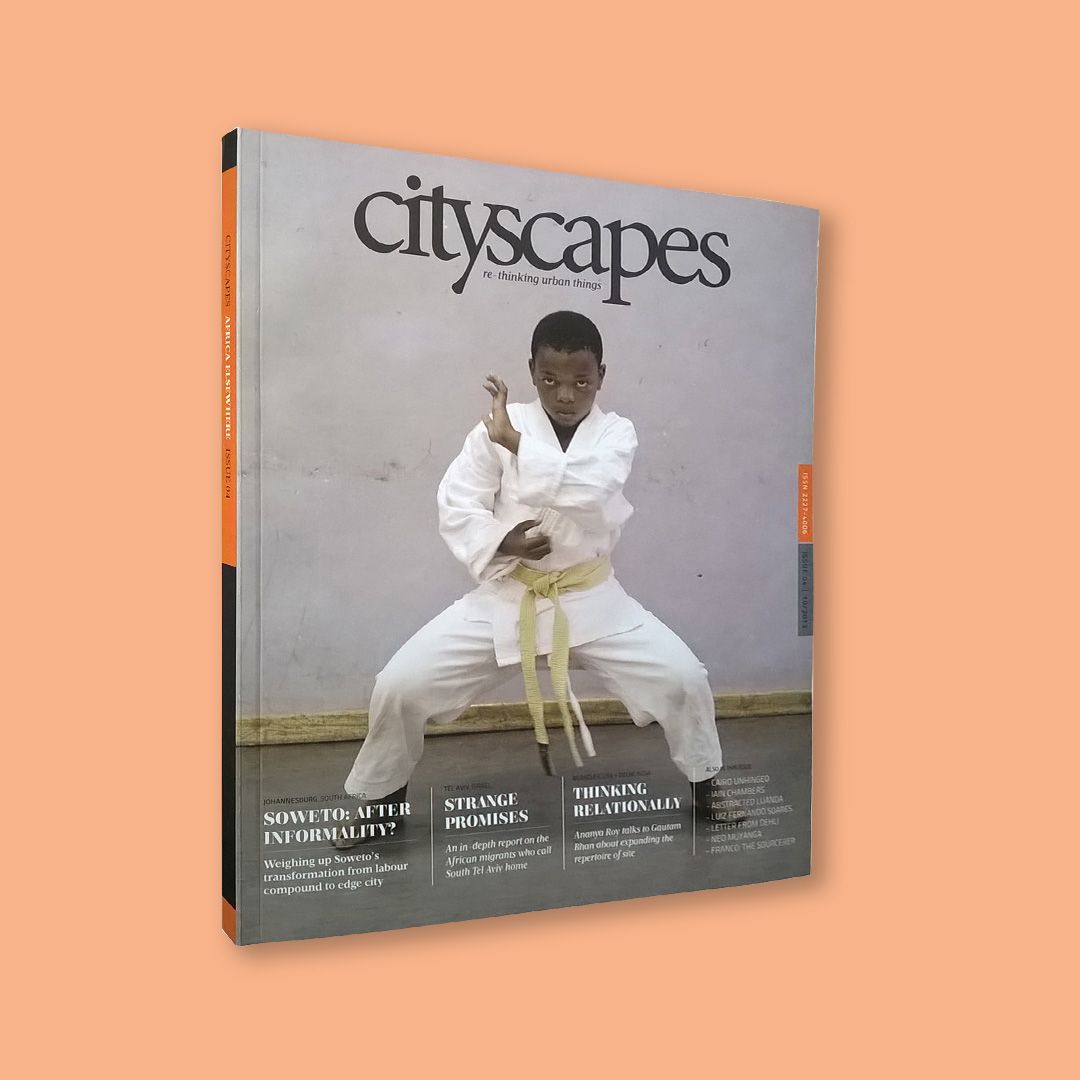
Photographer Jodi Bieber’s portrait of a member of the Dube Young Blood Shotokan Karate Club in Soweto introduces the focus of the fourth issue of Cityscapes: Soweto. Is it a viable model of what happens after informality? The question does not propose a simple answer. Soweto’s redevelopment is uneven. There are malls, loft developments, a theatre. More significantly, there are roads and basic services. Change is afoot, but not for all.
Also in the issue: a grouped series of reports, essays and interviews tracing a zigzag path connecting Tel Aviv to Naples to Berlin to Guangzhou, all cities where African migrants are a feature of the urban matrix. There is a speculative logic at work in this grouping.