
“…The struggle of black people inevitably appear in an intensely cultural form because the social formation in which their distinct political traditions are now manifest has constructed the arena of politics on ground overshadowed by centuries of metropolitan capitalist development, thereby denying them recognition as legitimate politics. Blacks conduct a class struggle in and through race. The BC of race and class cannot be empirically separated, the class character of black struggles is not a result of the fact that blacks are predominantly proletarian, thought this is true…”- (Frank Talk Staff Writers in ‘Azania Salutes Tosh’ – circa 1981)
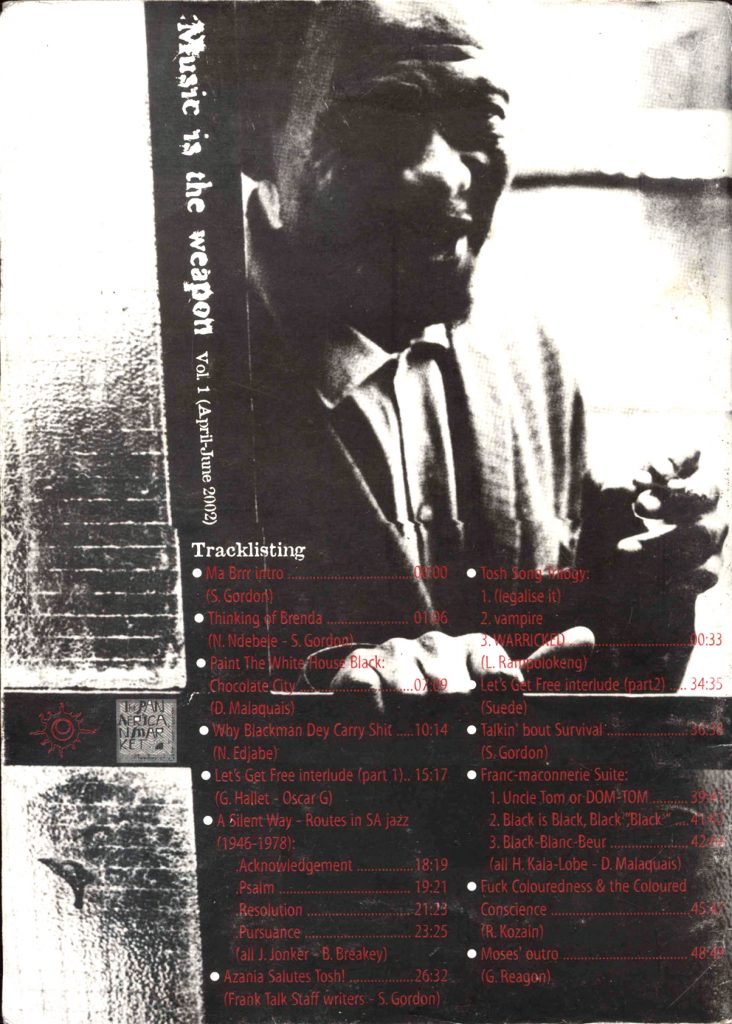
front cover:
Tosh by Steve Gordon
back cover:
Kippie by Basil Breakey
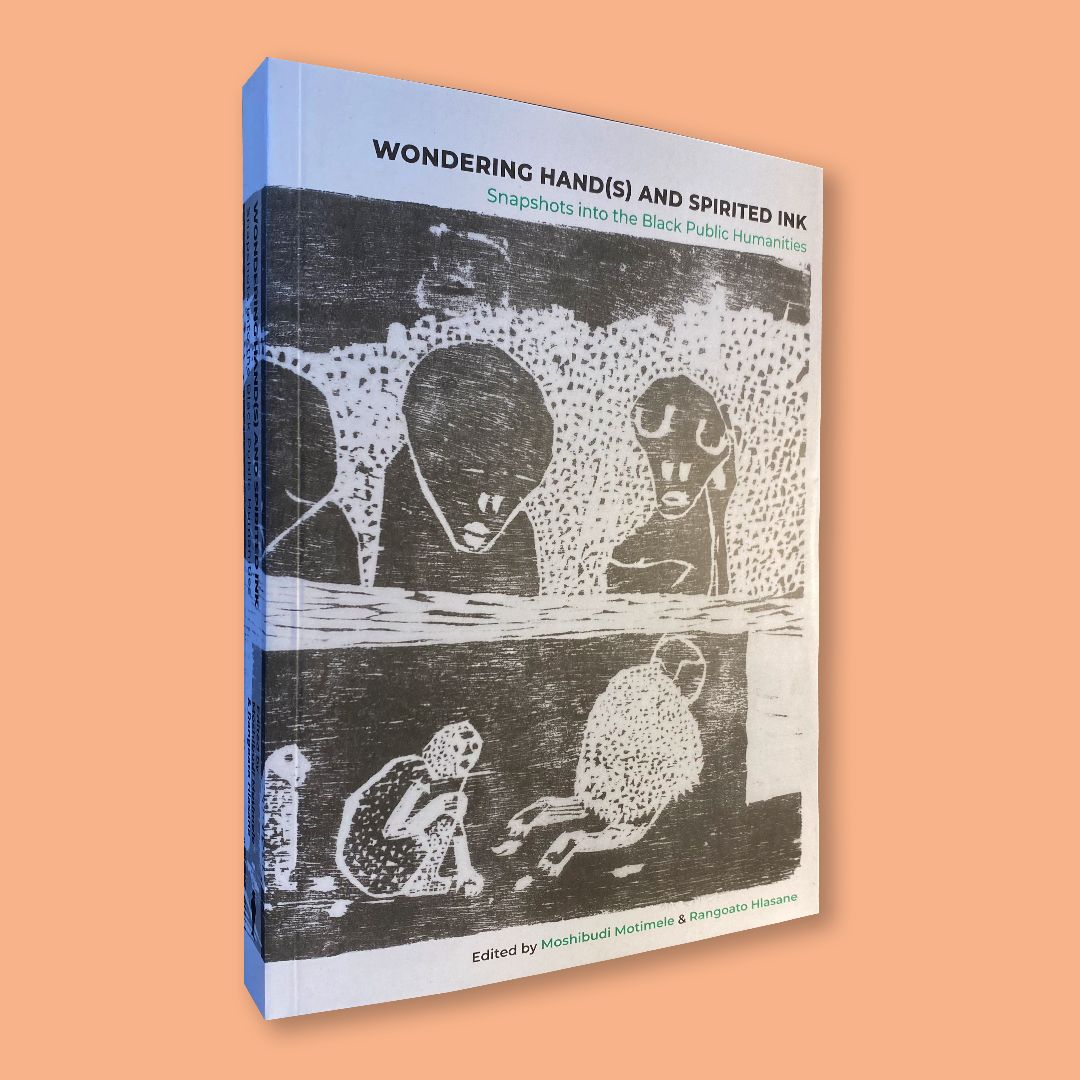
Keleketla! Library, in partnership with the Narrative Enquiry for Social Transformation (NEST) presents Wondering Hand(s) and Spirited Ink: Snapshots into the Black Public Humanities.
Inspired by the provocations of the 2019 Narrative Enquiry for Social Transformation (NEST) colloquium Call for Proposals, the papers that form part of this collection directly confront questions of black memory, thought, imagination, and praxis under conditions of extreme racialised and gendered violence.
Each of the essays thinks deeply and seriously about the historical and epistemological foundations of our inherited conceptual frames and the subsequent impact for the ways we invoke these frames in narratives of resistance, hope and freedom. From their different disciplinary and sociopolitical locations, the authors in this collection take seriously sites beyond the academy – the art gallery, stage, music video, the bedroom, the township, and the dance floor, to name a few – as key sites of knowledge production that have and continue to inform emerging narratives around black futures.
The collection traverses thematic spaces such as desire and consent, consumption and freedom, black performative possibility, post-apartheid black subjectivity and black memory. The aim of the collection is to create a pedagogical device that foregrounds the sonic, aesthetic, epistemic and performative strategies of creating emancipatory thinking, feeling, imagining and being, that will contribute to critically expanding the decolonial black archive.
Edited by: Moshibudi Motimele and Rangoato Hlasane with contributions by: Mawethu Nkosana; Moshibudi Motimele; Ayabulela Mhlahlo; Nomancotsho Pakade; Gorata Chengeta; Tumi Mogorosi; Same Mdluli; Rangoato Hlasane and Zukolwenkosi Zikalala.