
“…The struggle of black people inevitably appear in an intensely cultural form because the social formation in which their distinct political traditions are now manifest has constructed the arena of politics on ground overshadowed by centuries of metropolitan capitalist development, thereby denying them recognition as legitimate politics. Blacks conduct a class struggle in and through race. The BC of race and class cannot be empirically separated, the class character of black struggles is not a result of the fact that blacks are predominantly proletarian, thought this is true…”- (Frank Talk Staff Writers in ‘Azania Salutes Tosh’ – circa 1981)
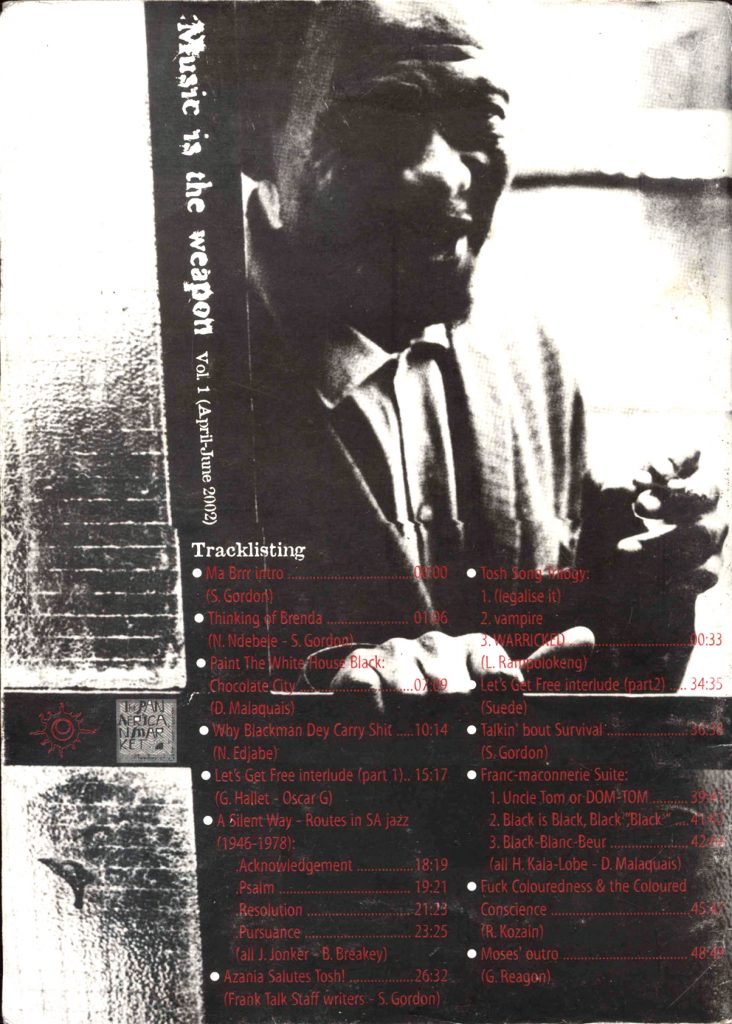
front cover:
Tosh by Steve Gordon
back cover:
Kippie by Basil Breakey
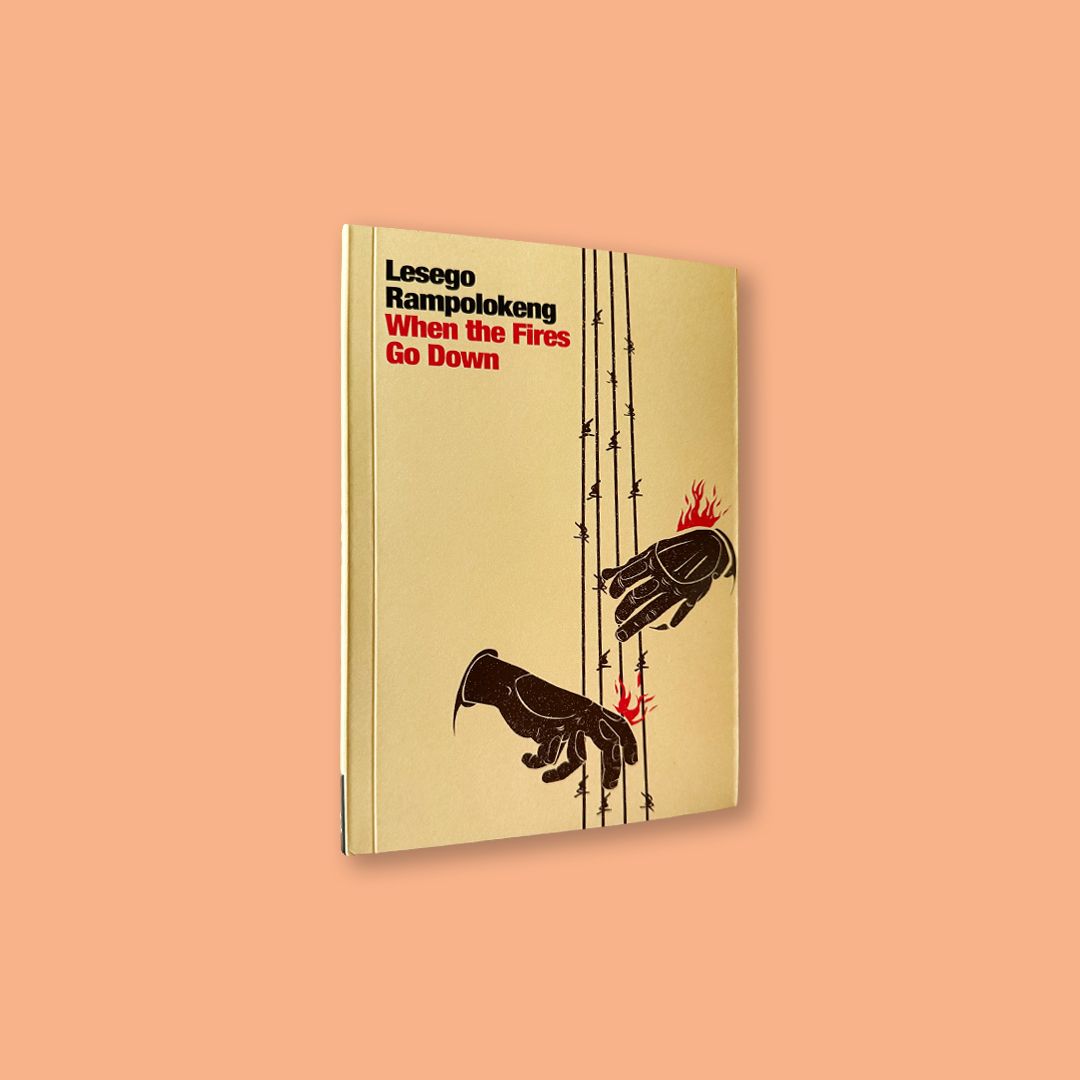
In When the Fires Go Down, Lesego Rampolokeng writes in the tense after the blaze: the hour of smoke, residue, reckoning, and the dangerous darkness that follows. The title itself carries both foreboding and aftermath—what happens when the flames drop, and what still burns underneath. Across these acute, fiery, unflinching litanies, Rampolokeng brings a relentless gaze to body, history, language, and nation, moving with precision, urgency, and a ferocious musical intelligence. The poems surge from dense, jazz-charged freedom sonics and black radical invocation into historical re-enactment, social-media derangement and repurposing, and hard street-level tribute—to Orlando West, its wounds, its styles, its unfinished struggles, a microcosm of what’s been, what is and what’s to come.
Part prayer, part performance, part poetic treatise, this is a book of conjuring and confrontation: incantatory, improvisatory, and alive with ecstatic wordplay, where high theory and low vernacular collide, where freedom is sung and interrogated, where memory returns as rhythm, scar, and prophecy. Here, Rampolokeng writes from both sides of the tracks at once—A-side and B-side, inside and outside—holding us in that crux until the mirror cracks and history speaks back.
"If there was any doubt about Lesego Rampolokeng’s important place in the literary history and trajectory of this country, the prophetic power and poetic pyrotechnics of his latest offering should be enough to suffocate such spirit of uncertainty for good." Unathi Slasha, author of the novels, Jah Hills and The Hollow Sound of Lightweight Bodies.